

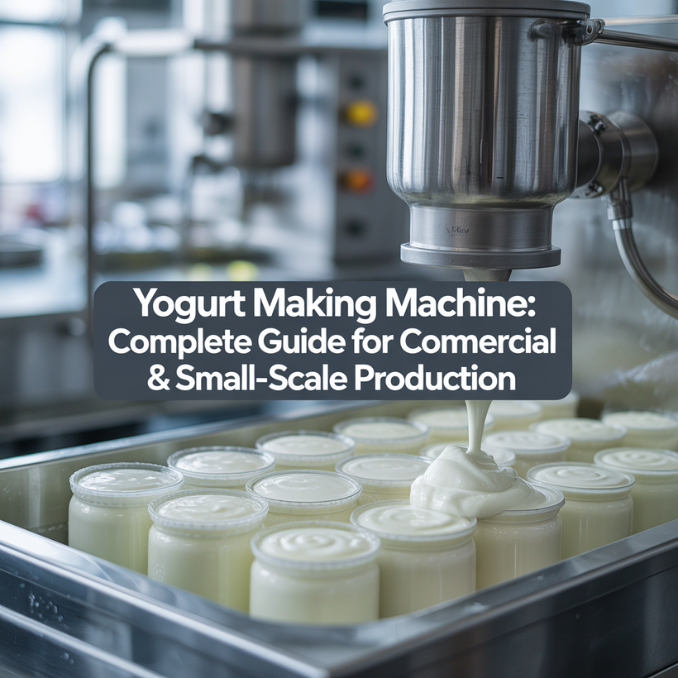
These days, yogurt making is no longer limited to old family traditions. In countries like India, curd is eaten daily—it’s part of life. But behind the scenes, things have changed. Retail stores need steady supply. Restaurants expect consistent quality. New food brands appear every month. Hand-made batches simply can’t keep up anymore.
Cleanliness matters more now. Uniform taste matters too. Production volume has climbed high on the priority list. Where clay pots once rested, machines now hum quietly, doing the same job with far more control.
That’s where a yogurt making machine comes in. Its role is simple: turn milk into yogurt without stress or guesswork. It heats, waits, and transforms—steadily and quietly—while you focus on the rest of your business.
Whether you’re opening a small yogurt shop or running a factory that processes hundreds of liters daily, understanding how these machines work makes a real difference. Choosing the right model early saves time, avoids costly mistakes, and keeps maintenance headaches to a minimum. When systems run smoothly, time slips by easily—and money stays where it should.
This guide explains everything clearly and practically. No heavy technical terms. No confusion. Just straightforward information you can actually use.
Yogurt Making Machine Basics
A yogurt making machine is usually built from food-grade stainless steel and designed to keep milk under controlled conditions until it turns into yogurt. Temperature stays stable. Mixing happens on time. Fermentation follows a set rhythm. Because of this, each batch ends much like the last—thick, smooth, and familiar.
Traditional yogurt making relies heavily on experience, weather, and intuition. One small change can alter the result. Machines remove that uncertainty. Heat and timing stay locked in, cycle after cycle, without constant supervision.
Put simply, yogurt makers use these machines to:
- Reduce manual effort
- Maintain hygiene standards
- Avoid batch failures
- Increase production capacity
For businesses, this consistency isn’t a bonus. It’s a requirement.
Yogurt Machine Operation Explained
One question comes up again and again:
“How does a yogurt making machine actually work?”
The process follows the natural stages of fermentation—just under fixed, reliable conditions.
Heating the Milk
Fresh milk is heated to eliminate harmful bacteria. This step improves food safety and sets the stage for clean fermentation.
Cooling to Fermentation Temperature
After heating, the milk cools to a comfortable range—usually between 42 and 45°C. This temperature allows beneficial bacteria to activate and grow properly.
Adding the Starter Culture
The starter culture is mixed evenly into the milk. Proper blending ensures fermentation spreads uniformly throughout the batch.
Controlled Fermentation
The machine maintains steady heat for several hours. During this time, bacteria convert milk sugars into lactic acid. The milk thickens, flavor develops, and yogurt forms naturally.
Cooling and Storage
Once fermentation is complete, cooling begins immediately to stop further souring. The yogurt is then ready for storage or packaging.
This steady process is what makes machine-made yogurt reliable and suitable for commercial sale.
Yogurt Machine Types
Yogurt making machines vary widely. The right choice depends on how much you plan to produce, your available space, and where your business is headed.
1. Small-Scale Yogurt Machines
Commonly used by:
- Small dairy farms
- Yogurt startups
- Hotels and restaurants
- Local suppliers
Batch sizes typically range from 50 to 500 liters. This capacity suits many small and growing operations.
Why producers choose them:
- Lower upfront investment
- Compact design
- Easy operation and maintenance
- Suitable for limited space
These machines allow businesses to start modestly and grow step by step.
2. Commercial Yogurt Making Machines
Designed for:
- Dairy processing plants
- Large yogurt brands
- Institutional food suppliers
Commercial units handle batches from 500 liters to several thousand liters per cycle.
Key advantages include:
- High production efficiency
- Better process control
- Consistent quality across batches
- Easy integration with pasteurizers, fillers, and packaging lines
Built for continuous use, these machines handle heavy workloads day after day.
3. Automatic vs Semi-Automatic Yogurt Machines
Semi-automatic machines require more hands-on involvement and cost less. They suit smaller setups with available labor.
Automatic machines run through programmed controls or PLC systems. They reduce human error and are ideal where volume and consistency matter most.
Budget, labor availability, and desired control level usually guide this decision.
Is a Yogurt Making Machine Worth It for Small Businesses?
Small business owners often hesitate and ask:
“Is a yogurt making machine really worth it?”
In most cases, yes.
For small operations, these machines:
- Reduce daily labor dependency
- Improve consistency
- Help meet hygiene expectations
- Keep pace when demand grows
Manual methods may work at very low volumes. But as orders increase, delays and mistakes follow quickly. Even a basic machine changes that rhythm, helping businesses scale without losing control.
Choosing a Commercial Yogurt Maker: Key Considerations
For commercial production, machine choice shapes long-term success.
Important factors include:
- Daily production needs—choose capacity wisely
- Food-grade stainless steel (SS 304 or SS 316) for safety
- Accurate temperature control for reliable fermentation
- Energy efficiency to manage operating costs
- Reliable after-sales support to reduce downtime
Choosing solely based on price can lead to problems later. Long-term performance matters more.
What Affects Yogurt Maker Prices?
A common question is:
“What is the price of a yogurt making machine?”
Prices vary depending on:
- Batch capacity
- Automation level
- Heating and cooling design
- Control panel type
- Custom features and accessories
Small machines require lower investment and suit startups. Commercial machines cost more but deliver durability and efficiency over time.
Upfront price tells only part of the story. Operating costs, maintenance, and lifespan matter just as much.
Yogurt Making Machine vs Traditional Methods
Traditional yogurt making still exists, mainly in homes or villages. But it struggles at scale.
Machines offer clear advantages:
- Consistent results
- Better hygiene
- Fewer batch failures
- Longer shelf life
When production stays uniform, customer trust grows naturally.
How to Choose the Right Yogurt Making Machine
Before deciding, ask yourself:
- How much yogurt do I need daily?
- What size is my operation?
- Do I need automation or manual control?
- What power supply is available?
- Will I expand later?
The best machine isn’t the biggest or the most expensive—it’s the one that fits your present needs and future plans.
Yogurt Making Machine Use in India
Modern yogurt making machines are well suited for Indian conditions. They handle:
- Local milk quality
- High ambient temperatures
- Common power variations
Machines from trusted manufacturers perform reliably across Indian dairy environments.
Frequently Asked Questions
1. How does a yogurt making machine work?
A yogurt machine heats milk, adds a starter culture, and maintains the right temperature for fermentation, producing consistent, thick, and hygienic yogurt every batch.
2. What is the best yogurt making machine for small businesses?
Small-scale machines (50–500 liters) with stainless steel tanks and easy controls are ideal for startups, shops, and restaurants, offering consistency and low labor needs.
3. How much does a yogurt making machine cost in India?
Small machines cost around ₹50,000–₹3,00,000, while commercial units range from ₹5,00,000–₹20,00,000, depending on capacity, automation, and features.
4. Can one machine make both curd and yogurt?
Yes, the same machine can make curd (dahi) or yogurt by adjusting fermentation time and temperature.
5. How do I maintain and clean a yogurt making machine?
Clean all milk-contact surfaces after each batch with warm water and mild detergent, rinse, and regularly check seals and components for long-lasting performance.
Final Thoughts
Consistency builds success. Machines maintain temperature and timing far better than manual methods. Whether starting small or scaling up, steady performance matters more than size. When routines replace guesswork, mistakes fade and growth feels natural.
Strong yogurt businesses are built on smart decisions made early. Choosing reliable equipment today lays the foundation for trust, stability, and long-term profit tomorrow.
If you’re looking to take your yogurt production to the next level, Mahesh Eng.Works offers high-quality yogurt making machines designed for both small and commercial setups. Whether you’re starting a small dairy, running a restaurant, or scaling up production, our machines help you achieve consistent, hygienic, and perfectly set yogurt every batch.