

Fresh milk leaves the cow at 37°C — the perfect temperature for bacteria to thrive. Within just 2 to 3 hours at room temperature, harmful bacteria multiply so fast that your milk can fail quality tests at the dairy collection point, even if it looks and smells perfectly fine.
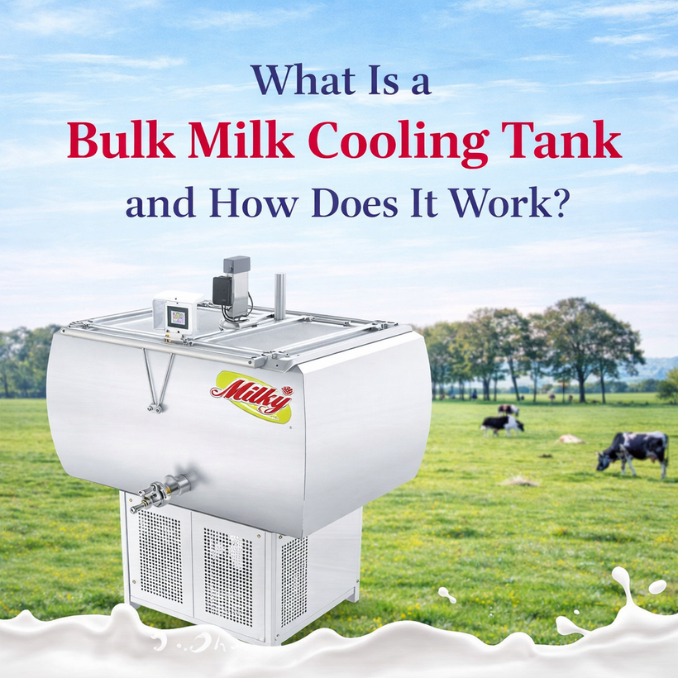
A bulk milk cooling tank solves this problem at the root. It is a large, insulated stainless steel vessel that rapidly chills fresh milk from 37°C down to 3°C–4°C within 2 to 3 hours, then holds it safely at that temperature until the dairy vehicle arrives for collection.
Also called a bulk milk cooler, milk cooling machine, or cooling milk tank, this equipment is the single most important investment a dairy farmer can make after the cattle themselves. It protects milk quality, prevents rejection, and directly improves income per litre.
How Does a Bulk Milk Cooling Tank Work? Step-by-Step
Understanding how your milk cooling equipment works helps you operate it better and catch problems early. Here is the process in plain language:
1. Fresh milk enters the tank. After milking, warm milk flows into the tank through a stainless steel inlet. The inner surface is food-grade SS304 or SS316 steel — hygienic, rust-free, and non-reactive with milk.
2. The compressor activates. A built-in refrigeration compressor pushes refrigerant gas through evaporator coils fitted inside or around the tank walls. These coils pull heat out of the milk rapidly.
3. The agitator stirs continuously. A slow paddle inside the tank keeps milk moving so every litre — top to bottom — cools evenly. It also prevents cream from separating on the surface.
4. Milk reaches a safe temperature. Within 2 to 3 hours, the milk cooling machine brings the temperature down to 4°C or below. The control panel holds it there automatically.
5. Collection and cleaning. Milk is pumped out when the dairy arrives. The tank must then be fully cleaned and sanitized before the next milking — every single time, without exception.
Types of Bulk Milk Coolers — Which One Is Right for Your Farm?
When you speak to bulk milk coolers manufacturers, they will offer two main types. Here is what matters for a small dairy farmer:
Direct Expansion (DX) Bulk Milk Cooling Tank
The most widely used type across Indian dairy farms. Refrigerant coils are in direct contact with the tank walls, cooling milk quickly and efficiently. Ideal for farms with twice-daily milking and a stable power supply. Energy-efficient, reliable, and recommended by most bulk milk coolers manufacturers for farms of all sizes.
Ice Bank Bulk Milk Cooler
Builds up ice reserves before milking, then uses stored ice to chill the milk rapidly. Best suited for large BMC milk machine centres that collect from multiple farmers, or areas with frequent power cuts. More expensive upfront but handles high-volume, fast cooling needs well.
For most small dairy farmers, a Direct Expansion bulk milk cooler is the smarter, more affordable choice.
Bulk Milk Cooling Tank Size Guide — How Much Capacity Do You Need?
Your cooling milk tank must hold at least two milkings worth of milk, since dairy collection usually happens every 24 to 48 hours.
| Farm Size | Daily Milk Output | Recommended Tank Size |
|---|---|---|
| 5–10 animals | 50–100 litres | 100–200 litres |
| 10–25 animals | 100–250 litres | 300–500 litres |
| 25–50 animals | 250–500 litres | 500–1,000 litres |
| 50+ animals | 500 litres+ | 1,000–2,000 litres+ |
The milk chiller 1000 ltr is one of the most popular sizes in India for mid-sized dairy farms — it balances capacity, energy consumption, and cost effectively. Always size slightly above your current need; your herd will grow but your tank cannot.
Milk Chiller 1000 Ltr Price in India — What Should You Expect to Pay?
Pricing varies based on brand, insulation quality, compressor brand, and whether a CIP (Clean-In-Place) system is included. As a general market reference for India:
| Tank Capacity | Approximate Price Range (INR) |
|---|---|
| 200 litres | ₹60,000 – ₹90,000 |
| 500 litres | ₹1,10,000 – ₹1,60,000 |
| 1,000 litres | ₹1,80,000 – ₹2,80,000 |
| 2,000 litres | ₹3,50,000 – ₹5,50,000 |
When comparing milk chiller 1000 ltr price across suppliers, do not choose on price alone. Always check the compressor brand (Danfoss, Embraco, or Bitzer are reliable), steel grade (SS304 minimum), warranty period, and — most importantly — local service availability.
Key Benefits of Using a Bulk Milk Chiller on Your Dairy Farm
A bulk milk chiller is not just equipment — it is an income protector. Here is what it genuinely does for your farm:
Higher price per litre — Many dairies and cooperatives in India pay a premium of ₹0.50 to ₹1.00 or more per litre for properly chilled milk delivered below 4°C.
Zero to near-zero rejections — Chilled milk consistently passes bacterial count and quality tests at collection points.
Less spoilage and waste — Properly cooled milk stored in a bulk milk cooling tank stays fresh for 24 to 48 hours with virtually no spoilage loss.
FSSAI and cooperative compliance — India’s food safety regulations and dairy cooperative standards increasingly require chilled milk at the farm level. A BMC milk machine setup keeps you compliant.
Better reputation with your dairy — Consistent quality builds trust. Dairies prefer farmers who deliver reliably cold milk every single day.
Frequently Asked Questions (FAQs)
What is a bulk milk cooling tank used for?
A bulk milk cooling tank is used to rapidly cool fresh milk after milking and store it safely at 3°C–4°C until it is collected by a dairy plant or cooperative. It prevents bacterial growth, maintains milk quality, and reduces spoilage and rejection at collection points.
What is the difference between a bulk milk cooler and a milk chiller?
Both terms refer to the same category of milk cooling equipment. “Bulk milk cooler” or “bulk milk chiller” typically refers to farm-level or collection-centre tanks that cool large volumes. “Milk chiller” is a broader term that can include smaller units as well. All perform the same core function — cooling milk rapidly and maintaining a safe storage temperature.
How long can milk stay in a bulk milk cooling tank?
Milk stored in a properly functioning bulk milk cooling tank at 4°C or below stays safe and fresh for 24 to 48 hours. Beyond 48 hours, quality begins to decline even in chilled conditions. Always aim for daily or alternate-day collection.
What is a BMC milk machine?
A BMC milk machine stands for Bulk Milk Chilling machine or Bulk Milk Cooler. It refers to the same cooling tank equipment used either at individual farms or at village-level milk collection centres that aggregate milk from multiple small farmers before sending it to the dairy plant.
How much does a milk chiller 1000 ltr cost in India?
A milk chiller 1000 ltr price in India typically ranges from ₹1,80,000 to ₹2,80,000 depending on the brand, compressor quality, insulation, and whether an automated CIP cleaning system is included. Always get quotes from at least 2 to 3 and compare warranty and service terms, not just price.
Which is better — direct expansion or ice bank bulk milk cooler?
For small dairy farmers with regular twice-daily milking and a stable power supply, a direct expansion bulk milk cooling tank is better — it is more energy efficient, easier to maintain, and costs less. An ice bank bulk milk cooler is more suitable for large volume collection centres or areas with unreliable electricity.
How do I clean a bulk milk cooling tank properly?
After every milk collection, rinse the tank with cold water first, then wash with hot water (70°C–80°C) and an approved alkaline dairy cleaner. Rinse again thoroughly. Once a week, use an acid-based cleaner to remove mineral deposits. Many modern milk cooling machines come with a built-in CIP (Clean-In-Place) system that automates this entire process.
What should I check when buying a bulk milk cooler from a manufacturer?
When choosing bulk milk coolers manufacturers, check for SS304 or SS316 inner tank steel, a reputed compressor brand (Danfoss, Embraco, or Bitzer), minimum 1-year warranty on parts and compressor, ISO or BIS certification, local service network availability, and farmer references from existing customers.
Conclusion
Absolutely and it pays for itself faster than most farmers expect. When you factor in the premium per litre for chilled milk, reduced rejections, near-zero spoilage, and stronger relationships with your dairy cooperative, a quality bulk milk cooling tank typically recovers its cost within 1 to 2 years on a mid-sized farm.
Whether you are starting small with a 200-litre cooling milk tank or evaluating milk chiller 1000 ltr price options for a growing operation the right milk cooling equipment is what separates a farm that struggles with quality from one that consistently earns more, wastes less, and grows confidently.

Mahesh Eng. Works
Written by Mahesh Engineering Works, specializing in precision dairy machinery and hygienic stainless-steel dairy solutions for small and medium dairy plants in India.