Have a question? Call us Now
+91-7574058811

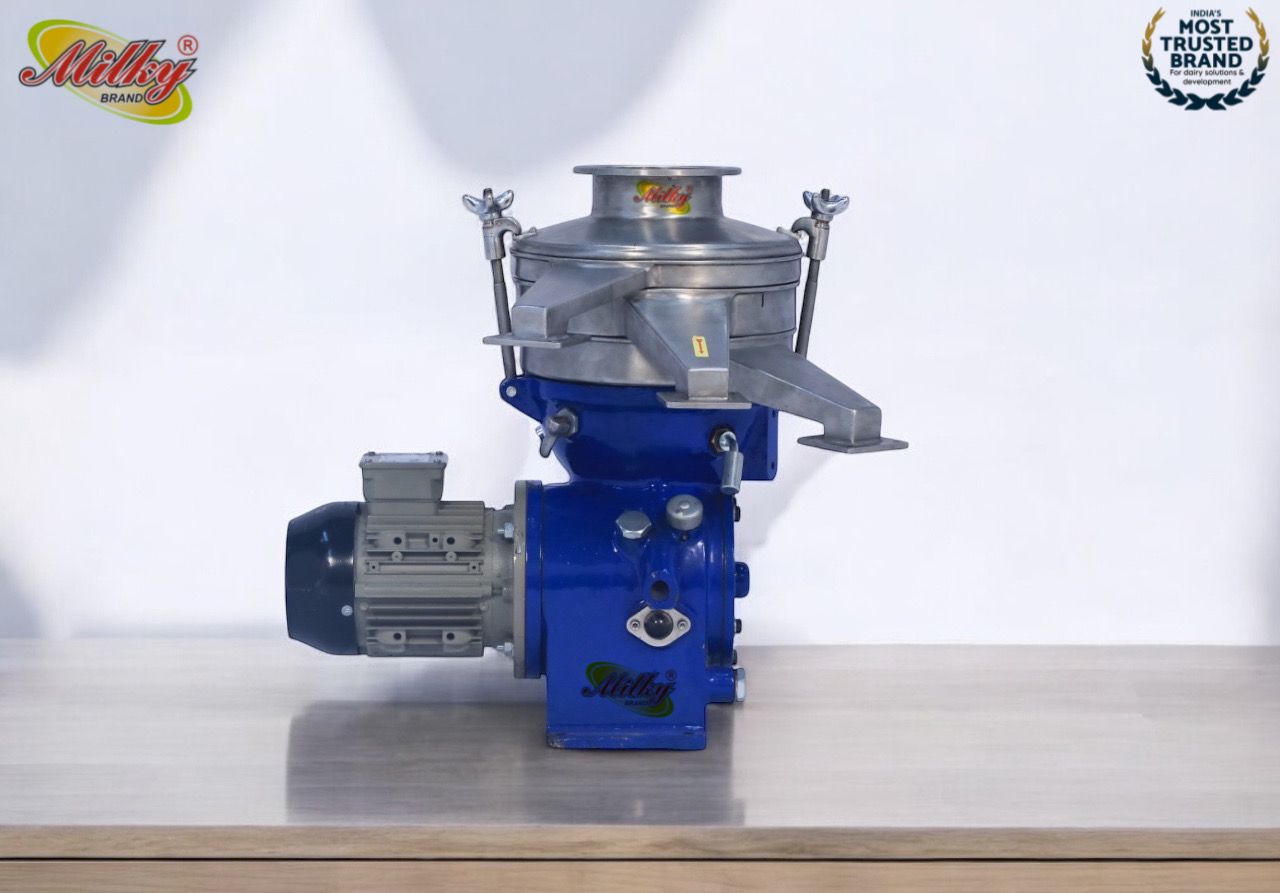
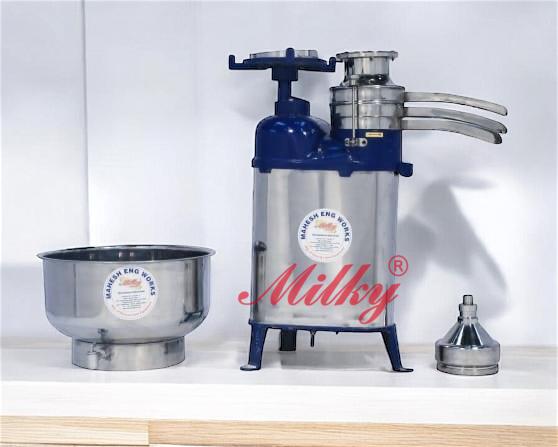
At Mahesh Eng Works, we are a ghee making machine manufacturer in India, offering advanced alternatives to effectively and hygienically produce high quality ghee. Our ghee making machines are designed to produce consistent quality, improved flavor and maximum yield; while allowing a dairy business to optimize the entire production process. The systems are manufactured to a high degree of precision, from food grade stainless steel, making them appropriate for small dairies, large dairy factories and ghee production facilities.
Our Ghee making machines range from cream separators, butter melter units, ghee boilers, and automatic ghee clarification equipment. They are designed to streamline the energy footprint and ease of maintenance; while managing the entire ghee production process, from cream collection to clarification; all of which can be managed at consistent production temperatures. We also offer customizable ghee machines for producing organic ghee, ayurvedic ghee preparation, and traditional desi ghee facilities, that are suited to increasing consumer demand for health and wellness.
A ghee making machine is dairy equipment that converts butter or cream into clarified ghee by heating it to evaporate moisture, separating milk solids from the fat, and refining the remaining product into stable, packaging-ready ghee.
None of these stages work in isolation poor melting affects heating, rushed heating affects clarification, and incomplete clarification affects both aroma and shelf stability. Managing the full sequence through a machine, rather than one stage at a time by hand, is what produces a more consistent result across every batch.
Read our guide on How the Right Ghee Clarifier Machine Maximizes Yield, Profit, and Processing Efficiency for Dairies to understand the key factors to consider.
Match capacity, processing type, heating method, and automation level to your actual production volume and utilities not to the highest specification available.
Before choosing a machine, you can also review our ghee making machine buying guide to understand how capacity, heating method, material and automation affect the overall investment.
Our ghee making machines are built around practical dairy engineering, with food-grade stainless steel product-contact parts and hygienic design throughout smooth surfaces, accessible cleaning points, and construction suited to daily commercial use.
We size and configure each machine around your actual production requirement rather than offering one fixed specification for every buyer. Our team handles installation, ongoing technical support, and spare parts availability once the machine is in service.
As a manufacturer and exporter, we also work with buyers outside India who need machines specified and documented for import and installation abroad. Get in touch to discuss your capacity, utilities, and automation preference.
What is a ghee making machine?
It's dairy processing equipment that converts butter or cream into clarified ghee through controlled heating, moisture evaporation, and clarification, replacing manual stovetop methods with a repeatable process.
What is the price range of a ghee making machine?
The price range of a commercial ghee making machine (ghee boiler/kettle) generally spans from ₹55,000 to over ₹4,50,000. The final cost is driven primarily by production capacity, material grade (SS 304 vs. SS 316), and the heating source (Gas, Electric, or Steam).
How does a ghee machine work?
It heats butter to melt it, evaporates moisture through controlled heating, separates milk solids during clarification, develops aroma through gentle heat, then filters and stores the finished ghee.
What capacities are available?
Capacities vary by model, from small-batch systems suited to entry-level commercial production up to high-volume continuous systems for large dairy plants. Contact us with your daily volume for an exact recommendation.
Can it process both cow and buffalo butter?
Yes, ghee making machines are generally designed to process butter derived from either cow or buffalo milk, since the clarification principle applies to both fat sources.
What utilities are required?
Electricity is required in all cases; steam-heated models also require a steam supply. The right choice depends on what utilities your plant already has in place.
Is automation available?
Yes, machines are available in manual, semi-automatic, and PLC-automated configurations, depending on production scale and staffing model.
How is the machine cleaned?
Cleaning is typically done through CIP (clean-in-place) systems where fitted, or manual cleaning protocols for simpler models. Hygienic design minimizes places where residue can collect.
What maintenance is required?
Routine maintenance includes post-batch cleaning, periodic descaling, and inspection of seals, motors, and moving parts. Simpler mechanical designs generally require less specialized servicing.
Can it integrate with an existing dairy plant?
Yes, ghee making equipment is generally designed to be added alongside existing pasteurizers, separators, or churners without requiring a full plant redesign.
Do you provide installation support?
Yes, installation assistance is provided to ensure the machine is set up and commissioned correctly before it goes into regular production use.
What's the difference between batch and continuous ghee making machines?
Batch systems process one load at a time and suit smaller or variable-volume operations; continuous systems process material through the line without stopping, suited to steady, high-volume production.
Do you offer spare parts and after-sales support?
Yes, spare parts availability and technical support are provided after installation to minimize downtime during ongoing operation.