Have a question? Call us Now
+91-7574058811

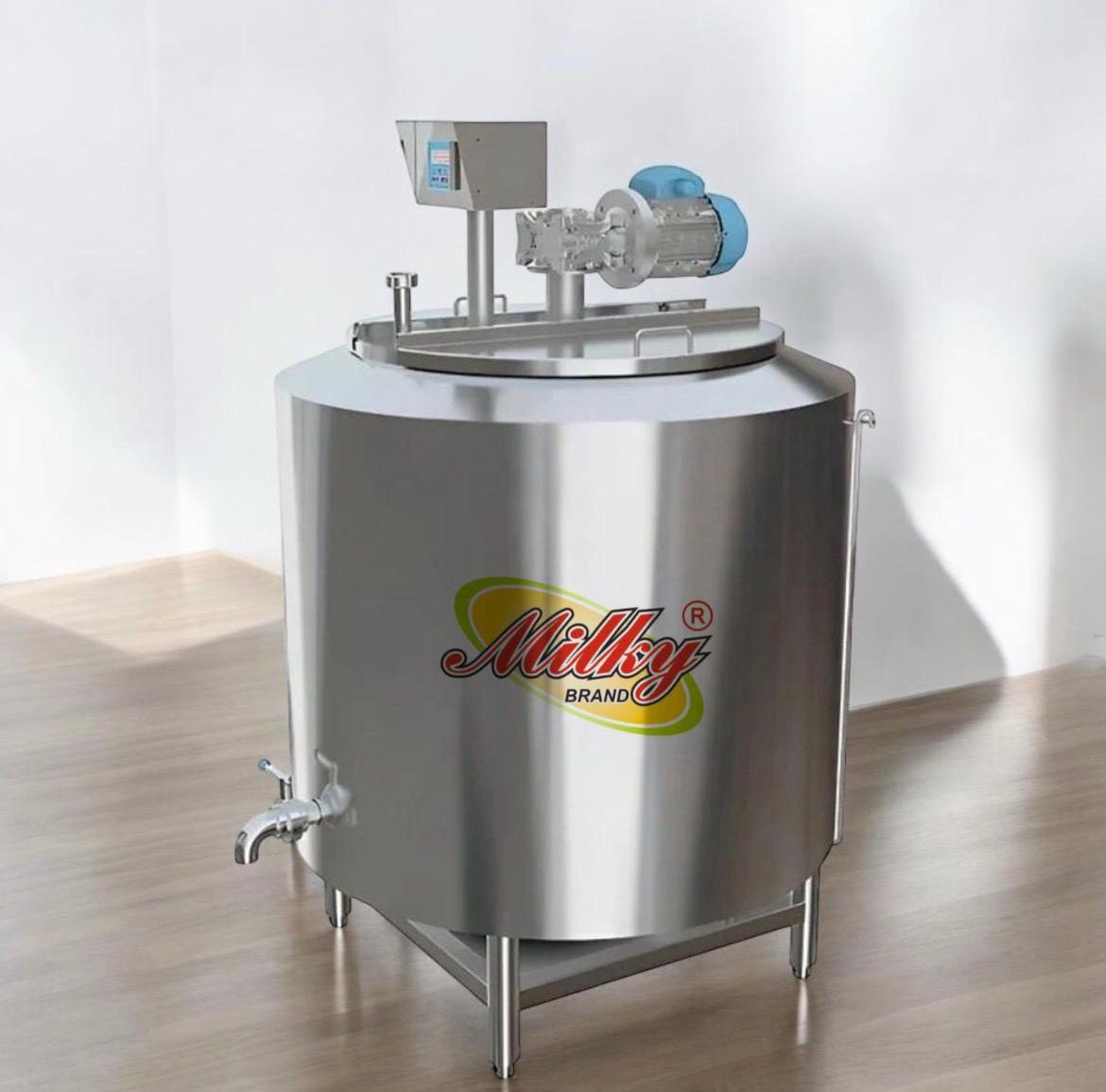
Mahesh Eng. Works manufactures and supplies batch pasteurizer machines for safe, consistent milk pasteurization across dairy plants, food processing units, and commercial kitchens.Our commercial milk pasteurizer range is built to destroy pathogenic microorganisms and reduce spoilage bacteria while preserving the milk's physico-chemical properties critical for producing safe milk and other dairy derivatives at scale, including cheese and paneer making machines and curd and yogurt making machines.
Broadly, pasteurization can be categorized as either low or high temperature pasteurization methods. Both of these can either be batch or continuous processes.
Low temperature pasteurization is majorly concerned with food safety and aims at killing all pathogenic microorganisms and reducing spoilage types in a food sample. Milk that has undergone low temperature pasteurization is suitable for making cheese because it encourages syneresis.
Low temperature pasteurization can assume various temperature/time combinations such as 63°C/30 minutes or 72°C/15 seconds. Mild heating kills all pathogenic bacteria and reduces the load of spoilage bacteria but preserves most physico-chemical properties of the milk, Milk Pasteurizer Exporter, Manufacturer and Supplier India.
On the other hand, high temperature pasteurization aims at killing the vegetative pathogenic and spoilage bacteria as well as denaturing as much serum protein as possible. High temperature pasteurized milk is more suitable for making yogurt because Syneresis will not occur. The serum proteins are denatured hence they will not separate.
High temperature pasteurization involves intense heating and may involve temperature/time combination regimes such as 140°/2 seconds, 85°C/30 minutes, or 90°C/20 minutes. Intense heating aims at destroying serum proteins to avoid syneresis.
The choice of the pasteurization method depends on several factors, which may not be limited to: Intended purpose of the pasteurized milk, Access to sophisticated equipment,
Volume of milk to be pasteurized, Target microorganism, etc Whatever the case, one can choose to carry out normal pasteurization or ultra pasteurization. Normal pasteurization will preserve milk for about two to three weeks while ultra pasteurization will preserve milk for even up to one year.
Our milk pasteuriser machines are available in 100, 200, 300, and 500 Litre capacities, with larger 500–2000 Litre skid-mounted systems built for manual operating setups. Each unit is constructed to international industry standards for optimum, safe, and easy-to-maintain performance across varied dairy and food industry applications.
For a detailed explanation of pasteurizer types, the milk pasteurization process, operating principles, and dairy applications, read our Milk Pasteurizer Machine: Types, Process & Applications (Complete Guide for Dairy Plants).
500 to 2000 Lt. Milk pasteurizer manual operating system skid
List of material we used in skid:-
We are one of the established manufacturers and suppliers of a wide assortment of pasteurizers. These pasteurizers are made in accordance with international industry standards and ensure optimum performance. These are available in various capacities as per the choices of our clients. Precisely designed and developed these pasteurizers are very safe and secure to use and are also easy to maintain. These find their wide application in various food and dairy industries.
SS 304 insulated and jacketed pasteurization tank with two-side operable cover, integrated agitator blades and shaft, and 50mm LRB insulation
Reputed-make gearbox and motor-driven agitator (3-phase) with VFD-based speed control
PID controller and PT100 sensor for accurate temperature monitoring and process control
Electric heaters sized to the tank (e.g., 500L: 6kW×3 heaters; 1000L: 12kW×3 heaters), heating from 35°C to 80–85°C
BF outlet valve with SMS unions; matt-finish interior, glass-bead exterior finish with branding
A batch pasteurizer machine heats a fixed quantity ("batch") of milk to a set temperature for a set time — as opposed to continuous-flow pasteurization — to kill pathogenic bacteria and reduce spoilage organisms while retaining most of the milk's natural properties.
Low temperature pasteurization uses milder heat (e.g., 63°C/30 minutes or 72°C/15 seconds) to kill pathogens while preserving physico-chemical properties — suitable for cheese-making. High temperature pasteurization uses more intense heat (e.g., 85°C/30 minutes, 90°C/20 minutes, or 140°C/2 seconds) to also denature serum proteins, making it more suitable for yogurt production.
Mahesh Eng. Works offers batch milk pasteurizers in 100, 200, 300, and 500 Litre capacities, along with larger 500–2000 Litre skid-mounted manual operating systems.
The Milky Batch Pasteuriser tanks are constructed in SS 304 with an insulated and jacketed design — for example, the 500L tank uses 2mm inner, 1.5mm intermediate, and 1.5mm outer shell thickness, with 50mm LRB insulation.
Temperature is monitored via a PT100 sensor (probe lengths of 700–900mm depending on model) and managed through a PID controller on the electrical panel, ensuring accurate and consistent heating from ambient to target pasteurization temperature.
Heating capacity scales with tank size — the 500 Litre model uses 3 heaters of 6kW each (heats to 85°C from 35°C), while the 1000 Litre model uses 3 heaters of 12kW each (heats to 80°C from 35°C).
Yes — each unit includes agitator blades and shaft driven by a gearbox (Rotomotive make) and a 3-phase motor, with VFD-based speed control for consistent, even heat distribution during pasteurization.
The skid system includes an SS pipe frame structure, a balance tank, inline filter, 1 HP milk pump, manual flow control valve, 14-second holding time tubes, and an electrical panel with temperature indicator and starter, along with all necessary pipe connections, valves, clamps, flanges, and height-adjustable skid legs.
Batch milk pasteurizers are used across dairy processing plants, cheese and yogurt manufacturing units, food processing facilities, and commercial kitchens requiring safe, consistent milk treatment at scale.
Normal pasteurization typically preserves milk for about two to three weeks under proper storage, while ultra-pasteurization can extend shelf life up to one year, depending on the process and packaging used.
Batch milk pasteurizer pricing varies significantly by capacity, automation level (manual vs. automatic), and construction (SS body, PID control, VFD, etc.): Basic small-batch pasteurizers start around ₹33,000–₹95,000, while mid-capacity 100–500 Litre units commonly range from ₹1,00,000 to ₹2,50,000 depending on automation grade and SS specification. Larger, fully automated or higher-throughput systems (500 LPH and above) can range from ₹2,50,000 up to ₹4,00,000 or more.
For current pricing and a comparison of batch and HTST systems, read our Milk Pasteurizer Price Guide in India: Batch vs HTST.