

Introduction
What makes milk truly acceptable starts with how it is handled at smaller production sites. Freshness is essential, but it’s only part of the equation. Milk must also be free from harmful microbes, maintain good taste, and have a reliable shelf life.
While these goals are clear, achieving them can be challenging—especially where access to advanced equipment or trained staff is limited. This is where heat processing becomes a dependable solution. By carefully applying heat, dairies can significantly improve milk safety and consistency. Rather than investing in complex systems, many small producers opt for batch-based heating. This method involves slow, controlled heating that is gentle on both the milk and the budget. It works especially well for modest production volumes and adapts easily to changing operational needs.
The true strength of batch processing isn’t speed—it’s control. By managing each batch carefully, dairy operators can achieve steady, reliable results without unnecessary complexity.
Understanding Batch Pasteurization
Batch pasteurization uses carefully controlled heat to kill harmful bacteria in milk while keeping its natural taste and quality. The milk is usually heated to about 63°C and held at that temperature for 30 minutes to make it safe. In some cases, the time or temperature may change slightly to meet local rules or specific needs.
Unlike continuous systems where milk keeps flowing through machines, batch pasteurization stops the process at each stage. The milk stays in one place during heating and holding. Another method uses much higher heat for a very short time and works without stopping. Each method follows a different pattern based on speed, temperature, and process design.
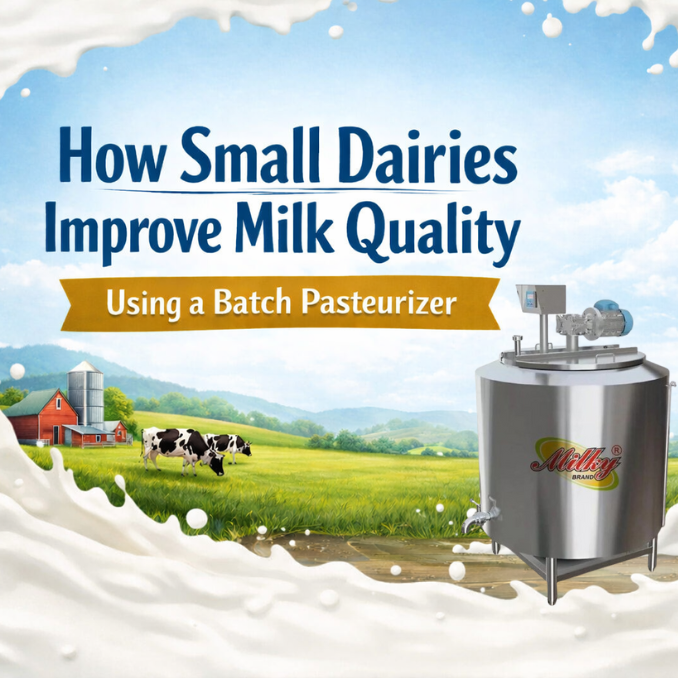
In a batch pasteurizer, milk is stored in a vat. An agitator gently moves the milk to spread heat evenly. Heating and cooling happen in separate steps, one after the other. Basic machines use manual controls, while advanced models have digital panels for better control. Some machines also include monitoring systems, reducing the need for constant checking. Built-in sanitation features help keep the system clean.
Milk Batch Pasteurizers come in many sizes to suit different dairy needs. They can handle small or large batches. Manual and automatic options are available. Lower energy use makes them a good choice for small dairies.
Benefits of Using Batch Pasteurizers in Small Dairies
Batch pasteurizers use carefully controlled heat to reduce harmful microbes in milk. This greatly improves milk safety. When processing is done correctly, the shelf life of milk increases noticeably. Flavor stays consistent because each batch receives the same treatment. Texture also remains more stable compared to untreated milk. Over time, consistent quality builds consumer trust. A reliable process also strengthens the brand image in a quiet but steady way.
Batch pasteurizers work especially well for small operations. They can handle different quantities without needing major system changes. Unlike fixed-output systems, these machines allow producers to switch between products, such as cheese, yogurt, or flavored milk. This flexibility makes recipe testing easier. Because changes are simple to manage, dairies can adjust production based on customer demand. Over time, this flexibility influences how products develop and appear in the market.
Cost is another key advantage. Batch pasteurizers usually require lower initial investment than continuous systems. They also consume less power, helping reduce daily operating expenses. Their simple design makes them easier to operate, so fewer workers are needed. This suits small teams and modest dairy setups. The result is an efficient, practical solution for growing dairy businesses.
Implementing Batch Pasteurization in Small Dairies
When choosing a batch pasteurizer, start by looking at the size of your operation, the types of products you make, and your budget. It’s also important to think about long-term support. The life of the equipment often depends on whether service and spare parts are easily available after installation. Meeting local regulations is just as important, as it ensures legal operation and protects public health.
Before installation, make sure there is enough space around the machine. Access to electricity, water supply, and drainage should be confirmed in advance. After the unit is placed, alignment is checked first. Then the system is tested to confirm that heating and holding temperatures meet required standards.
Proper operator training plays a big role in successful batch pasteurization. Staff should first understand how to use the equipment correctly before learning about maintenance or troubleshooting. Written procedures help ensure the same steps are followed every time. Keeping accurate records shows that safety and quality standards are being met over time. Following clear, structured processes also helps meet regulatory requirements without extra effort.
Maximizing Milk Quality with Batch Pasteurizers
Milk that enters pasteurization in good condition gives better and more consistent results. Good handling starts at collection. Clean milking practices matter a lot. Proper temperature control during storage also makes a difference later. Clean equipment helps maintain consistent quality. When sanitation is poor, risks increase—even if problems are not visible right away.
Preparation steps are often ignored, but they strongly affect the final outcome. Clean surfaces do not guarantee safety, but they reduce risk. Each step in the process connects to the next. How milk is handled before heating sets the conditions for pasteurization. High microbial levels at the start can make processing harder. Poor storage weakens milk quality early on. Thorough cleaning removes hidden sources of spoilage. What happens before heating cannot be fixed later. Consistent results depend on many small actions taken early.
Careful control of heating time and temperature keeps milk safe without harming its natural qualities. Gentle mixing during heating ensures even temperature throughout the milk. Close monitoring helps detect issues early so corrections can be made on time.
After pasteurization, handling remains critical. Rapid cooling prevents bacteria from growing again. Clean packaging protects the milk from contamination. Proper storage and transport help maintain freshness. How milk is handled after pasteurization affects what finally reaches the consumer.
Conclusion
Small dairies often choose batch pasteurizers because they are easy to use and deliver reliable results. These machines provide steady output, which supports food safety while allowing flexibility in product types. Since the initial cost is usually moderate, many local dairies see batch pasteurizers as a practical investment. Even when workloads change, performance remains consistent, helping maintain uniform quality across batches.
Over time, improvements in heating controls and monitoring systems can increase accuracy during pasteurization. Although the machines are simple in design, they adapt well when production needs change. Future developments may further improve energy efficiency and extend the shelf life of pasteurized milk and other dairy products.
Batch pasteurization also helps small dairies meet safety regulations while giving them space to expand into new products. In a changing dairy industry, long-term success often comes from learning continuously and responding to customer needs. Careful planning and gradual technology upgrades build resilience more effectively than sudden, large changes.
Explore batch pasteurizer machines from Mahesh Eng. Works, designed for small and medium dairies. Our systems deliver consistent heating, reliable hygiene, and energy-efficient performance—perfect for growing dairy operations.
FAQs
1. What is a batch pasteurizer and how does it work in small dairies?
A batch pasteurizer is a dairy machine designed for small and medium dairies that heats milk in controlled batches to kill harmful bacteria while preserving taste and nutrients. Milk is gently heated, held at the right temperature, and then cooled, with agitators ensuring even heat. This simple process ensures consistent milk quality without high costs.
2. Why is a batch pasteurizer better than a continuous system for small dairy operations?
Small dairy farms prefer batch pasteurizers because they are flexible, cost-effective, and easy to operate. Unlike continuous systems, batch pasteurizers allow changing batch sizes, producing multiple dairy products, and testing new recipes—perfect for growing dairies with limited space and budget.
3. How does batch pasteurization increase milk safety and shelf life?
Batch pasteurization carefully heats milk to kill harmful microbes while maintaining its natural flavor and texture. By following proper heating, cooling, and hygiene practices, dairies can extend shelf life, reduce spoilage, and deliver safe, high-quality milk to consumers every time.
4. What are the top maintenance tips to keep a batch pasteurizer efficient?
To ensure long-lasting performance, clean the vat and agitators regularly, check temperature controls, and inspect seals and pipes. Routine maintenance prevents contamination, reduces downtime, and keeps milk quality consistent for small dairy operations.
5. Can batch pasteurizers handle products other than milk?
Yes! Batch pasteurizers are versatile and perfect for cream, yogurt, flavored milk, and other dairy products. Small dairies can experiment with new recipes, scale production easily, and maintain consistent quality—all without investing in separate machines.