

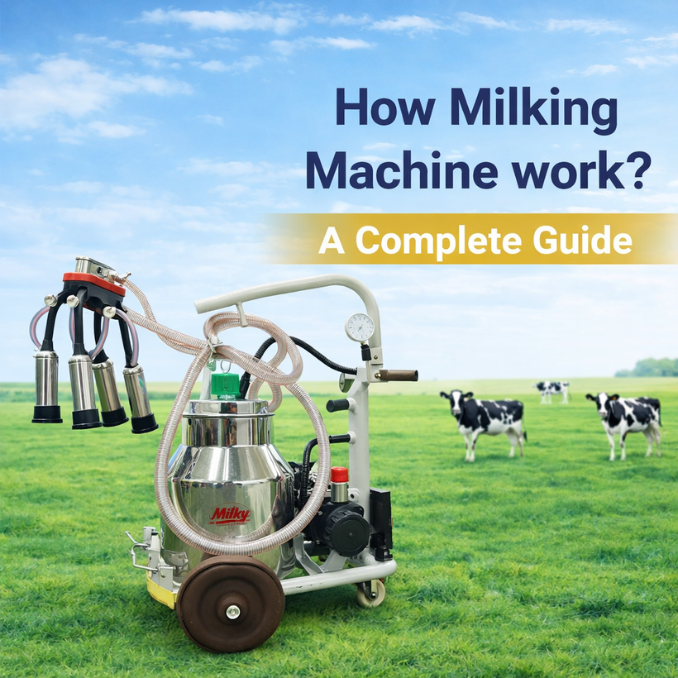
A healthy dairy cow can produce around 6–7 gallons of milk per day. Multiply that by dozens—or even hundreds—of cows, and you quickly see why modern dairy farming depends on efficient milking systems.
Before milking machines, farmers milked cows by hand. This process was slow, needed skilled labor, and limited the number of cows one farmer could handle. Milking could take hours every day. Today, milking machines have transformed dairy farming. They make milking much faster, more hygienic, and less tiring for farmers. At the same time, they are gentle on cows, helping ensure comfort and consistent milk flow.
This guide explains how a milking machine works, the main components involved, and why it has become an essential part of modern dairy farms.
From Hand Milking to Modern Machines
For generations, hand milking was the only option. Farmers sat beside each cow and manually extracted milk, twice a day, every day. The process was tiring and inconsistent, especially as herd sizes increased.
The first mechanical milking attempts appeared in the late 1800s. Early designs were basic and often uncomfortable for cows. The real breakthrough came with the development of controlled vacuum systems, which allowed milk to be drawn gently and consistently from the udder.
Over time, engineers improved teat cup design, added pulsation to protect teat health, and refined vacuum control. What started as a simple mechanical aid has now become a carefully engineered system focused on milk quality, cow comfort, and farm efficiency.
The Two Core Principles Behind Every Milking Machine
Every milking machine—no matter how advanced—works on two basic principles: vacuum and pulsation.
How Vacuum Draws Milk
A vacuum pump creates low pressure inside the milking system. This pressure difference allows milk to flow from the udder into the teat cups and through the milk lines.
The key point is control. Too much vacuum can damage teats and stress the cow. Too little vacuum results in slow or incomplete milking. Modern machines maintain a stable, carefully set vacuum level that supports steady milk flow without harming udder tissue.
Why Pulsation Is Essential
Vacuum alone is not enough. If it were applied continuously, it would restrict blood flow in the teat. That’s where pulsation comes in.
Inside each teat cup is a soft liner that opens and closes in a regular rhythm:
- During the milking phase, the liner opens, and milk flows out.
- During the rest or massage phase, the liner collapses gently around the teat, allowing blood circulation to recover.
This alternating action closely resembles natural suckling. It protects teat health, encourages proper milk let-down, and keeps cows comfortable throughout the milking process.
Most systems operate at 45–60 pulsation cycles per minute, with a balanced rest-to-milk ratio.
Main Components of a Milking Machine System
A milking machine is made up of several interconnected parts, each playing a specific role.
Vacuum Pump
The vacuum pump is the heart of the system. It generates the suction needed for milking and runs continuously during operation. Pump size depends on how many cows are milked at the same time.
Vacuum Regulator
This device keeps vacuum levels steady, even when clusters are attached or removed. Stable vacuum is critical for consistent milking and cow comfort.
Pulsation System
The pulsator controls the opening and closing of the teat cup liners. Modern electronic pulsators offer precise control and improve milking efficiency.
Milking Cluster (Teat Cups and Claw)
This is the part that attaches directly to the cow:
- Teat cups hold the liners and apply vacuum.
- The claw collects milk from all four teats and sends it into the milk line.
Milk and Air Lines
Milk lines transport milk to the receiver, while air lines manage vacuum and pulsation. Smooth, food-grade materials help prevent residue buildup and contamination.
Milk Receiver
The receiver temporarily collects milk and separates air from liquid before pumping it to the bulk tank. Sight glasses allow farmers to monitor milk flow.
Milk Pump and Bulk Milk Tank
The milk pump transfers milk to the bulk tank, where it is rapidly cooled to around 4°C. Cooling slows bacterial growth and preserves milk quality until collection.
Types of Milking Machines Used on Dairy Farms
Different dairy operations require different systems.
Bucket Milking Machines
Common on small farms, bucket milkers are portable and simple. Milk is collected directly into a stainless steel bucket attached to the cluster.
Pipeline Milking Systems
Used widely on medium and large farms, these systems send milk through fixed pipelines directly to the milk room, saving time and labor.
Rotary Milking Parlours
Ideal for large commercial dairies, rotary systems allow continuous cow movement and high throughput, making them extremely efficient.
Robotic Milking Systems
Robotic milkers operate automatically. Cows enter voluntarily, and sensors guide the robotic arm. These systems reduce labor and provide detailed data on each cow’s production and health.
Why Milking Machines Are Essential for Modern Dairy Farms
Milking machines offer clear advantages when used and maintained correctly.
They allow farmers to milk more cows in less time, reduce dependence on manual labor, and maintain consistent milking routines. Enclosed systems improve hygiene and help maintain low bacterial counts.
For cows, gentle pulsation and controlled vacuum reduce stress and support udder health. For farmers, machines reduce physical strain and make herd management more predictable.
Keeping Milking Machines in Top Condition
Even the best machine needs proper care.
Regular cleaning after every milking prevents bacterial buildup and protects milk quality. Liners should be inspected and replaced on schedule, as worn liners can harm teats and reduce milk flow.
Vacuum levels and pulsation rates should be checked regularly. Periodic professional servicing ensures the system runs as designed and helps prevent costly breakdowns.
What the Future Holds for Milking Technology
Milking technology continues to evolve. Sensors now track milk flow, temperature, and conductivity in real time. Advanced software helps farmers spot health issues early and manage herds more efficiently.
Manufacturers are also focusing on energy efficiency, sustainability, and improved cow comfort. The goal remains the same: better milk, healthier cows, and easier farm management.
Final Thoughts
Milking machines have reshaped dairy farming. What was once slow and labor-intensive is now a controlled, efficient, and hygienic process. By understanding how these machines work and maintaining them properly, dairy farmers can protect cow health, improve milk quality, and run more profitable operations.
For dairy farms looking to upgrade or expand, Mahesh Eng. Works offers reliable milking machine solutions designed for Indian dairy conditions, supporting farms of all sizes with proven equipment.
Frequently Asked Questions
How often should milking machine liners be replaced?
Most liners should be replaced every 1,500–2,500 milkings or about 6 months, depending on usage and manufacturer guidelines.
Can milking machines cause mastitis?
Poor maintenance or incorrect settings can increase mastitis risk. Proper cleaning, correct vacuum levels, and good liner condition greatly reduce this risk.
What vacuum level is ideal for milking cows?
Typical operating ranges fall between 39–58 kPa, depending on system design and herd requirements.
How is robotic milking different from traditional systems?
Robotic systems automate attachment, milking, and detachment, while traditional systems require manual handling. Robots offer labor savings but involve higher initial investment.
Why is cleaning after every milking important?
Cleaning removes milk residue and bacteria, helping prevent milk spoilage and udder infections while maintaining consistent milk quality.