

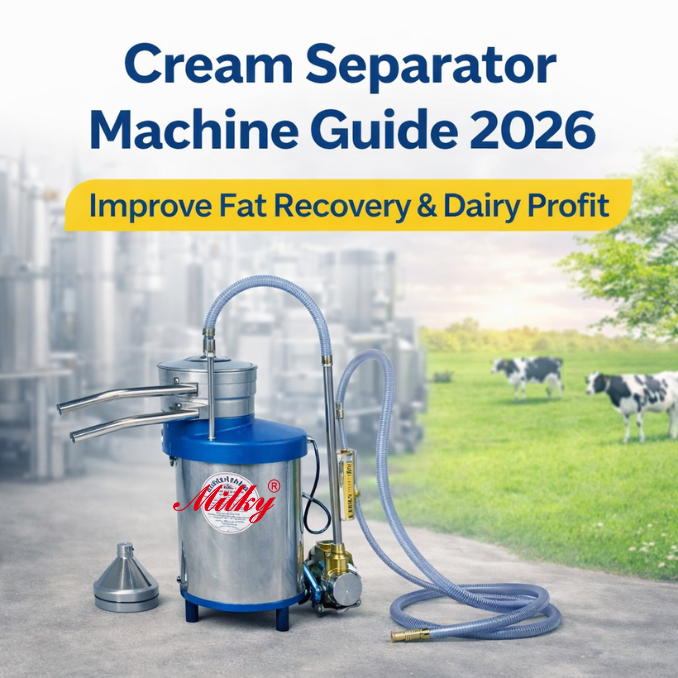
What Is a Cream Separator Machine and Why Is It Important in 2026?
A cream separator machine is a centrifugal dairy machine that separates cream (milk fat) from skim milk by spinning milk at high speed. In 2026, it has become essential for small and medium dairy plants in India because even a 0.1–0.3% improvement in fat recovery can significantly increase monthly profits.
If you’re running a dairy in Gujarat or anywhere in India, you already know that every bit of fat matters. The right cream separator isn’t just another machine on the floor — it directly affects how much value you pull out of your milk every single day. A good unit can recover almost all the fat, which means you’re not unknowingly sending profit down the skim milk line. It also gives you steady, uniform cream thickness, so when you move to butter or ghee production, you’re not dealing with batch-to-batch variation. Over time, this consistency makes milk standardization easier, reduces guesswork, and simply helps you run a tighter, more profitable operation.
How Does a Cream Separator Machine Work?
A cream separator works on the principle of centrifugal force.
Think of it like this — when something spins really fast, the heavier part naturally gets pushed outward. A cream separator machine uses that simple idea.
When you start the machine, the milk flows into a bowl that’s spinning at very high speed. Inside, there are thin metal discs stacked closely together. These discs aren’t just for show — they help the milk spread out into thin layers so separation happens quickly and properly. As the bowl keeps spinning, the heavier skim milk moves toward the outer edge, while the lighter fat gathers closer to the center. Within moments, the machine directs cream from one outlet and skim milk from another, and the process continues smoothly without stopping.
Why This Engineering Design Matters
- The disc stack design reduces separation time.
- High RPM ensures smaller fat globules are also separated.
- 304-grade stainless steel prevents corrosion in humid dairy environments.
- Balanced bowl assembly reduces vibration and bearing wear.
The engineering behind the bowl and disc system directly impacts fat recovery efficiency and machine lifespan.
Types of Cream Separator Machines Available in India
When it comes to choosing a cream separator, the right option really depends on how much milk you handle every day and how serious your operation is.
Manual cream separators are usually seen in very small farms where milk volume is limited. They work, but they demand physical effort since someone has to operate them by hand. The rotation speed is lower compared to motorized machines, so separation takes more time. For a small household setup, that’s manageable. But once milk volume starts increasing, manual units quickly become impractical.
Electric cream separators are a common choice for small dairy plants processing around 300 to 1,500 litres per day. With a motor maintaining steady speed, separation becomes faster and far more consistent. You don’t have to worry about uneven spinning affecting cream quality. The result is uniform cream density and smoother daily operations without heavy manual effort.
For larger setups, industrial cream separators are built for continuous, demanding use. These are typically used in medium dairy plants handling 1,000 to 5,000 litres per day. They come with heavy-duty motors, larger bowl capacities, and are designed to run for long hours without performance drops. Many models also support CIP (Clean-In-Place) systems and continuous discharge mechanisms, which reduce downtime and make them suitable for more professional, large-scale production environments.
Cream Separator Capacity Guide (India 2026)
Choosing correct capacity improves ROI and energy efficiency.
| Dairy Size | Milk Processing / Day | Recommended Separator (LPH) | Ideal Use Case |
| Small | 300–1000 Liters | 500–1000 LPH | Cream, small butter production |
| Medium | 1000–5000 Liters | 1000–3000 LPH | Cream, ghee, standardization |
Oversizing increases power consumption. Undersizing reduces efficiency and creates bottlenecks.
What Features Should You Look for in 2026?
When selecting a cream separator machine in India, evaluate:
- SS 304 food-grade contact parts
- High-speed balanced bowl
- Adjustable cream thickness screw
- Low vibration motor assembly
- Easy dismantling for cleaning
- Local spare parts availability
Why SS 304 Stainless Steel Actually Makes a Difference
In a dairy setup, machines don’t get an easy life. There’s moisture in the air almost all the time, regular washing with strong detergents, and milk fat sticking to surfaces during processing. If the material isn’t right, you’ll start seeing rust spots, surface damage, or hygiene issues sooner than you’d like.
That’s why SS 304 stainless steel is such a sensible choice. It handles damp conditions without corroding, doesn’t react with milk, and stands up well to daily cleaning. The surface stays smooth, which makes washing easier and keeps things hygienic. Over time, that simply means fewer headaches, better product safety, and equipment that keeps doing its job without constant repairs.
Cream Separator Machine Price in India (2026)
When it comes to pricing, there isn’t one fixed number because several practical factors come into play. The capacity of the machine, usually measured in litres per hour (LPH), makes a big difference — higher output generally means a larger investment. Motor power also matters, since a stronger motor is needed for steady, high-speed separation.
The material used in construction, especially the grade of stainless steel, affects durability and cost. Automation features can also increase the price, particularly if the machine is designed for continuous operation or easy cleaning. And finally, after-sales service support plays a role. A machine backed by reliable service and readily available spare parts may cost slightly more upfront, but it often saves money and stress in the long run.
Approximate Price Range:
- Small units: ₹40,000 – ₹1,20,000
- Medium industrial units: ₹1,50,000 – ₹5,00,000+
For Gujarat-based dairy plants, local manufacturing reduces freight cost and ensures faster service support.
How Does a Cream Separator Improve Dairy Profit?
Even small fat recovery improvements impact revenue.
Example Scenario:
- Daily processing: 1500 liters
- Extra fat recovery: 0.2%
- Additional cream yield per day: ~3 liters
- Monthly revenue gain: Significant (depending on cream/ghee price)
When integrated with:
- Bulk Milk Coolers
- Pasteurizers
- Ghee kettles
The separator becomes part of a complete value-add chain.
Common Buying Mistakes Dairy Owners Make
There are a few common mistakes that can cost more in the long run than most dairy owners expect.
Going for the lowest price without looking at efficiency is one of them. A cheaper machine may save money upfront, but if it doesn’t recover fat properly, you’re losing revenue every single day. Another thing many people overlook is RPM. The rotation speed directly affects separation performance — if it’s too low or unstable, cream recovery suffers.
Service support is equally important. Before buying cream separator machine always check whether spare parts and technicians are easily available in Gujarat. Delays in service can bring operations to a halt. And finally, don’t skip operator training. Even a good machine won’t perform well if it’s not handled correctly.
At the end of the day, a poorly designed bowl assembly reduces fat recovery efficiency, and that hidden loss adds up month after month — often costing far more than the difference in purchase price.
Maintenance Checklist for Long Machine Life
Daily:
- Clean bowl and discs
- Wash cream outlet line
Weekly:
- Inspect seals
- Check motor vibration
Every 6–12 Months:
- Professional inspection
- Bearing and shaft alignment check
Preventive maintenance improves efficiency and reduces downtime.
Why Cream Separator Machines Are Essential for Gujarat Dairy Businesses
If you’re in the dairy business in Gujarat, you already know how competitive the market is. The state is one of the largest milk producers in India, and buyers today expect consistent quality — whether it’s toned milk, fresh cream, ghee, or butter.
With growing demand for standardized milk, steady ghee production, and value-added dairy products, you can’t rely on guesswork anymore. Proper cream separation gives you control. It helps you maintain consistent fat levels, improve ghee yield, and ensure butter production stays uniform from batch to batch.
When separation is efficient, you’re not just improving product quality — you’re protecting your margins. Every extra bit of fat recovered translates into better returns. In a high-volume dairy state like Gujarat, that small difference quickly turns into a big advantage.
Frequently Asked Questions (FAQ)
What is the ideal cream separator machine capacity for a small dairy plant?
For 500–1000 liters/day, a 500–1000 LPH machine is ideal.
How much fat recovery can modern separators achieve?
Up to 98–99% under proper operating conditions.
Can cream thickness be adjusted?
Yes, using a cream adjustment screw mechanism.
Is it suitable for buffalo milk?
Yes. Ensure the machine supports higher fat percentages (common in India).
Conclusion
A cream separator machine is not just equipment—it is a fat recovery optimization system. For small and medium dairy plants in India, especially Gujarat, the right separator improves yield, reduces wastage, and strengthens profitability.
Investing in engineered, hygienic, and service-supported machinery ensures long-term business stability.

Mahesh Eng. Works
Written by Mahesh Engineering Works, specializing in precision dairy machinery and hygienic stainless-steel dairy solutions for small and medium dairy plants in India.