

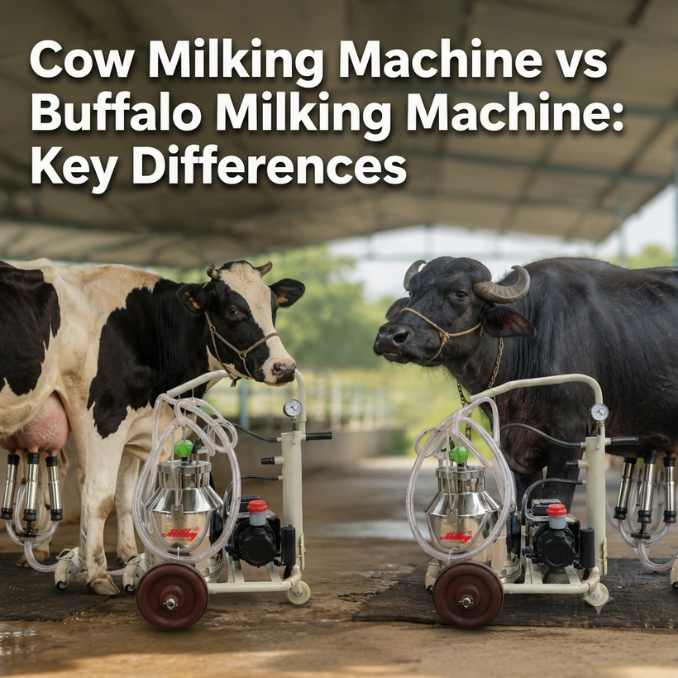
Buy the wrong milking machine and you will feel it every single day. A vacuum level tuned for buffalo teats can bruise a cow’s udder. A pulsation ratio built for cows can leave buffalo milk in the udder, cutting your yield and inviting mastitis. Farmers who don’t check this before buying end up with slower milking, sore animals, higher vet bills, and a machine that never really fits their herd.
Cows and buffaloes are not the same animal at the milking parlour. Their teats, udder pressure, and let-down behaviour are different enough that the machine settings need to be different too. This guide breaks down exactly where cow milking machines and buffalo milking machines differ, what that means for milk yield and udder health, what these milking machines cost in India, and how to pick the right one for your farm without guessing.
Cow Milking Machine vs Buffalo Milking Machine
Cow and buffalo milking machines work on the same vacuum-and-pulsation principle, but buffalo machines use higher vacuum, slower pulsation, and narrower liners to match a buffalo’s shorter, tighter teat canal and slower milk let-down. Using a cow-calibrated machine on buffaloes (or vice versa) usually means slower milking and higher mastitis risk.
| Feature | Cow Milking Machine | Buffalo Milking Machine |
|---|---|---|
| Vacuum level | 35–42 kPa (typical range) | 40–46 kPa (typical range) |
| Pulsation rate | 50–60 cycles/minute | 45–55 cycles/minute |
| Pulsation ratio (suction:rest) | 60:40 to 65:35 | 65:35 to 70:30 |
| Teat shape | Cylindrical, generally longer | Shorter, thicker, more conical |
| Milk let-down | Faster, less stimulation needed | Slower, requires more manual stimulation |
| Liner design | Standard bore, medium wall thickness | Wider bore, softer/thicker liner wall |
| Average milking time | 4–7 minutes per animal | 6–10 minutes per animal |
| Fat content handling | Lower fat, flows more easily | Higher fat, needs gentler, steadier draw |
Cow Milking Machine Overview
A cow milking machine is a vacuum-based device that draws milk from a cow’s udder through teat cup liners connected to a claw, then into a bucket or pipeline. Cow udders typically respond quickly to stimulation, and milk flow is fairly steady once let-down begins. This is why cow machines are generally set to a slightly lower vacuum and a quicker pulsation cycle the goal is to move milk out efficiently without over-stressing a teat that is naturally longer and more elastic than a buffalo’s.
Most Indian dairy farms use single or double bucket cow milking machines for herds under 20–30 animals, moving to pipeline systems as herd size grows.
Buffalo Milking Machine Overview
A buffalo milking machine works on the same vacuum-and-pulsation principle but is calibrated around buffalo physiology. Buffalo udders let down milk more slowly and often need proper pre-milking stimulation (massaging the udder) before the machine is attached. Buffalo teats are shorter and more conical, so the liner bore and vacuum need to form a secure, even seal without excessive squeezing. Buffalo milk also carries higher fat content, which needs a steadier, less aggressive draw to avoid churning the milk inside the liner (which can affect fat quality and cause liner slip).
Buffalo milking machines exist as a separate category because buffalo teats, let-down speed, and milk fat content behave differently from cows’. Using a cow-calibrated machine on buffaloes usually means slower extraction, more residual milk left in the udder, and a higher risk of teat-end damage over time.
Why Cow and Buffalo Milking Machines Are Different
The difference comes down to three physiological factors: teat anatomy, let-down speed, and milk composition. A machine is really just a vacuum pump and a set of settings the real engineering decision is matching those settings to the animal. Manufacturers build cow and buffalo clusters, liners, and pulsators differently because a one-size-fits-all approach compromises one animal or the other.
Physical Differences Between Cow and Buffalo Teats
- Cow teats: generally longer, more cylindrical, and more elastic.
- Buffalo teats: shorter, thicker at the base, and more conical in shape.
- Teat-end condition varies more in buffaloes, which is why liner fit matters more for them.
These differences directly affect liner bore size and how a teat cup seats onto the teat during milking.
Vacuum Level Comparison
| Animal | Typical Vacuum Range | Why |
|---|---|---|
| Cow | 35–42 kPa | Longer, more elastic teats tolerate lower vacuum well |
| Buffalo | 40–46 kPa | Shorter, firmer teats need slightly more vacuum for a secure seal |
Running a buffalo machine at cow-level vacuum often causes slow, incomplete milking. Running a cow machine at buffalo-level vacuum can cause discomfort and, over time, teat-end hyperkeratosis (thickening and roughening of the teat-end skin).
Pulsation Ratio Comparison
| Animal | Pulsation Rate | Suction:Rest Ratio |
|---|---|---|
| Cow | 50–60 cycles/min | 60:40 to 65:35 |
| Buffalo | 45–55 cycles/min | 65:35 to 70:30 |
The pulsator controls how long the liner squeezes the teat versus how long it rests. Buffaloes generally benefit from a slightly longer rest phase because their let-down is slower and teat tissue responds better to a gentler rhythm.
Milking Speed Comparison
Cows typically finish milking in 4–7 minutes with a properly set machine. Buffaloes usually take 6–10 minutes, partly because of slower let-down and partly because buffalo milk is thicker and flows less freely through the liner and claw.
Cluster and Liner Differences
Buffalo clusters are generally built with a wider liner bore and a softer wall to accommodate the shorter, thicker teat shape without excessive squeezing. Cow clusters use a narrower bore suited to the more cylindrical cow teat. Liner material (silicone or rubber) matters for both, but buffalo liners often need replacement slightly more often due to the higher mechanical load from thicker milk and firmer teat contact.
Milk Yield Considerations
Getting the settings wrong doesn’t just slow milking down it affects how much milk you actually collect. Incomplete milking (common when a buffalo machine is under-set) leaves milk in the udder, which reduces total yield over time and can also lower the udder’s future milk-producing capacity if it happens repeatedly. On the cow side, over-milking with excess vacuum can cause liner slip and irritation, which cows respond to by holding back milk on future visits.
Animal Behaviour Differences
Cows generally settle into a milking routine quickly and let down milk with minimal stimulation. Buffaloes are more sensitive to changes in handler, sound, and routine, and often need a calm, consistent pre-milking massage to trigger proper let-down. Farms milking both animals often see better results when buffalo milking is scheduled with a more consistent handler and quieter environment.
Can One Machine Milk Both Cows and Buffaloes?
Yes, many bucket milking machines sold in India, including single and double bucket units, are marketed for both cows and buffaloes and can technically milk either. However, best results usually require using the correct liner size and following animal-appropriate stimulation and vacuum practices rather than treating both animals identically.
Mahesh Eng. Works positions its single and double bucket milking machines as suitable for both cow and buffalo milking machine, provided the cluster and liner match the herd. If your farm milks a mixed herd, ask your supplier about liner options and confirm the standard configuration fits your predominant animal type before buying.
Advantages of Cow Milking Machines
- Faster milking cycle per animal
- Lower vacuum requirement, generally gentler wear on components
- Wide availability of standard liners and spares
- Works well with quicker let-down, so less pre-milking stimulation needed
Advantages of Buffalo Milking Machines
- Built for higher-fat milk without excessive churning
- Liner and cluster design matched to shorter, thicker teats
- Better secure seal at higher vacuum for buffalo teat shape
- Reduces slip and re-attachment issues common when using a cow machine on buffaloes
Disadvantages to Consider
| Machine Type | Common Drawbacks |
|---|---|
| Cow Milking Machine | Not ideal for buffalo teats if vacuum/liner isn’t reconfigured; may under-milk buffaloes |
| Buffalo Milking Machine | Slightly higher vacuum can be excessive for cow teats if not adjusted; liners may need more frequent replacement |
Cow Milking Machine Price in India
| Price Tier | Range | What You Get |
|---|---|---|
| Entry level / manual | ₹6,000–₹15,000 | Hand-operated or foot-pump systems with a smaller 10–12 litre stainless steel bucket; no electric motor required |
| Portable electric (most popular) | ₹18,000–₹35,000 | 0.75 HP automatic single-bucket systems, typically 25-litre capacity — the standard choice for farms with 1–10 cows |
| Double bucket electric | ₹35,000–₹70,000 | Trolley-mounted double-bucket systems with 1–2 HP motors, suited to mid-size herds needing faster throughput |
| Premium & fixed systems | ₹1,20,000–₹1,50,000+ | Premium international brands with multi-cluster units, or fixed pipeline infrastructure for large commercial herds |
Most small and medium Indian dairy farms land in the ₹18,000–₹35,000 portable electric tier, since it balances speed, cost, and ease of maintenance without needing fixed infrastructure. The ₹1,20,000+ tier is really only necessary if you’re buying a premium multi-cluster brand or building out pipeline infrastructure for a large commercial operation most single-farmer and small-cooperative setups don’t need to go that high. For a detailed breakdown by herd size and features, see our full best milking machine for cows in India guide.
Prices are approximate market ranges and vary by brand, motor rating, and bucket material always confirm current pricing and exact specifications directly with the manufacturer before purchase.
Buffalo Milking Machine Price in India
Buffalo milking machines tend to sit at a similar or slightly higher price point than cow machines of comparable capacity, mainly due to the reinforced liners, higher-rated vacuum pumps, and additional stimulation features some models include. Basic single-bucket units generally start around ₹18,000–₹20,000, with double-bucket and higher-automation models going well beyond ₹1,60,000 depending on build quality and accessories.
Price Comparison Table
| Configuration | Cow Machine (Approx.) | Buffalo Machine (Approx.) |
|---|---|---|
| Manual / entry level | ₹6,000–₹15,000 | ₹8,000–₹18,000 |
| Portable electric single bucket | ₹18,000–₹35,000 | ₹20,000–₹40,000 |
| Electric double bucket | ₹35,000–₹70,000 | ₹40,000–₹80,000 |
| Premium / fixed pipeline systems | ₹1,20,000–₹1,50,000+ | ₹1,30,000–₹1,60,000+ |
These are general Indian market ranges for comparison purposes only. Actual pricing depends on brand, motor rating, materials, and automation level request a specification sheet and formal quote before deciding.
Factors That Affect Price
- Bucket size and material (stainless steel grade affects durability and price)
- Motor power and vacuum pump rating
- Level of automation (manual vs electric vs pipeline)
- Brand reputation and after-sales support
- Warranty length and spare parts availability
- Included accessories (extra liners, claws, stimulation attachments)
Buying Guide: How to Choose the Right Milking Machine
- Identify your primary animal. If you milk mostly cows, buy a cow-calibrated machine. If mostly buffaloes, buy a buffalo-calibrated one.
- Check herd size. Under 10 animals generally suits a single or double bucket unit; larger herds justify a pipeline system.
- Confirm vacuum and pulsation settings against the ranges in this guide, or ask the manufacturer directly.
- Ask about liner material and replacement schedule — this affects long-term running cost more than the upfront price.
- Check power source compatibility (electric vs manual) against your farm’s infrastructure.
- Request the specification sheet before buying, especially if you plan to milk both cows and buffaloes on the same unit.
Common Mistakes Buyers Make
- Buying a cow machine and using it on buffaloes without checking vacuum settings
- Choosing the cheapest option without checking liner and spare-part availability
- Ignoring herd size and buying an undersized unit that slows down milking
- Skipping the pre-milking stimulation step required for buffaloes
- Not budgeting for liner replacement as part of running cost
Maintenance Tips
Cleaning Checklist
- Rinse with warm water immediately after milking
- Wash with a food-grade alkaline detergent
- Follow with an acid rinse on a weekly cycle to prevent mineral buildup
- Inspect liners for cracks, discolouration, or hardening
Replacement Schedule
| Component | Typical Replacement Interval |
|---|---|
| Rubber liners | Every 1,500–2,500 milkings (roughly 3–6 months on daily use) |
| Silicone liners | Longer-lasting, often 4,000–5,000 milkings |
| Vacuum pump service | Every 6–12 months, or per manufacturer guidance |
| Gaskets and hoses | Inspect every 3 months; replace if cracked or brittle |
Daily, Weekly, and Monthly Maintenance
| Frequency | Task |
|---|---|
| Daily | Rinse, detergent wash, vacuum gauge check, liner inspection |
| Weekly | Acid rinse cycle, check fittings and hose connections, lubricate moving parts as specified |
| Monthly | Full liner inspection/replacement check, pulsator rhythm check, vacuum regulator calibration |
Expert Buying Advice: Who Should Buy Which Machine
- Small cow dairy (under 10 cows): Manual or electric single-bucket cow machine.
- Small buffalo dairy (under 10 buffaloes): Electric single-bucket buffalo machine with proper liner sizing.
- Mixed herd (cows and buffaloes): Look specifically for a machine with an adjustable vacuum regulator and pulsator, and confirm dual-animal suitability with the manufacturer before buying.
- Growing commercial dairy: Consider a pipeline system sized for your 3–5 year herd growth plan, not just current numbers.
Summary
Cow and buffalo milking machines look similar but are tuned differently where it matters: vacuum level, pulsation ratio, and liner design. Cows generally need lower vacuum and quicker pulsation; buffaloes need slightly higher vacuum, a slower pulsation ratio, and wider, sturdier liners. Getting this match right protects udder health, improves milk yield, and reduces long-term running costs. When in doubt, check the specification sheet or ask the manufacturer directly rather than assuming one machine suits both animals.
Frequently Asked Questions
What is the difference between a cow and buffalo milking machine?
The core difference is in vacuum level, pulsation ratio, and liner design. Cow machines typically run at 35–42 kPa vacuum with a faster pulsation ratio, matched to longer, more elastic cow teats. Buffalo machines run slightly higher, at 40–46 kPa, with a slower pulsation ratio and wider liners suited to shorter, thicker buffalo teats. The underlying vacuum-and-pulsation technology is the same; the calibration is what changes.
Can one machine milk both cows and buffaloes?
Some machines with adjustable vacuum regulators and pulsators can be recalibrated to serve both animals, but this isn’t guaranteed across all models. Before assuming dual-animal use, confirm with the manufacturer whether the specific machine supports the vacuum and pulsation range needed for both cows and buffaloes.
Which machine gives better milk extraction?
Neither machine is inherently “better” extraction quality depends on whether the vacuum and pulsation settings match the animal being milked. A correctly calibrated cow machine extracts cow milk efficiently; a correctly calibrated buffalo machine does the same for buffalo milk. Mismatched settings, in either direction, reduce extraction efficiency.
Do buffaloes require different vacuum pressure than cows?
Yes. Buffaloes generally need a slightly higher vacuum level (around 40–46 kPa) compared to cows (around 35–42 kPa), because buffalo teats are shorter and firmer and need a bit more vacuum to form a secure, effective seal during milking.
What is the ideal pulsation ratio for milking machines?
For cows, a suction-to-rest ratio of roughly 60:40 to 65:35 is common. For buffaloes, a slightly longer rest phase around 65:35 to 70:30 is generally preferred, since buffalo teat tissue responds better to a gentler, slower rhythm.
Which machine is better suited for Indian dairy farms?
This depends entirely on the herd. India has a large buffalo dairy population alongside crossbred and indigenous cow herds, so the “better” machine is the one matched to the farm’s dominant animal. Mixed herds should prioritize machines with adjustable settings rather than picking one type over the other.
How much does a cow milking machine cost in India?
Basic manual single-bucket cow milking machines generally start around ₹6,000–₹15,000, with electric single and double-bucket models ranging from roughly ₹35,000 to ₹1,50,000 depending on motor power, materials, and automation level. Larger pipeline systems are quoted separately based on herd size.
How much does a buffalo milking machine cost in India?
Buffalo milking machines are typically priced slightly above equivalent cow machines, starting around ₹18,000–₹20,000 for basic manual units and going up to ₹1,60,000 or more for higher-capacity electric double-bucket models.
How often should milking machine liners be replaced?
Rubber liners are generally replaced every 1,500–2,500 milkings (roughly every 3–6 months with daily use), while silicone liners last longer, typically 4,000–5,000 milkings. Buffalo liners may need slightly more frequent replacement due to the higher mechanical load from thicker milk.
Is a portable milking machine a good option for small farms?
Yes, for farms with fewer than 10 animals, a portable single or double-bucket milking machine is generally the most practical and cost-effective choice, offering good hygiene and speed improvements over hand milking without the infrastructure investment a pipeline system requires.

Mahesh Eng. Works
Written and reviewed by Mahesh Eng. Works, a dairy machinery manufacturer specializing in milk cream separator machines and hygienic stainless steel dairy equipment. Since 1980, we have been designing and manufacturing cream separators, butter churners, milk pasteurizers, bulk milk coolers, and complete dairy processing solutions for dairy farms, milk collection centers, and processing plants.