

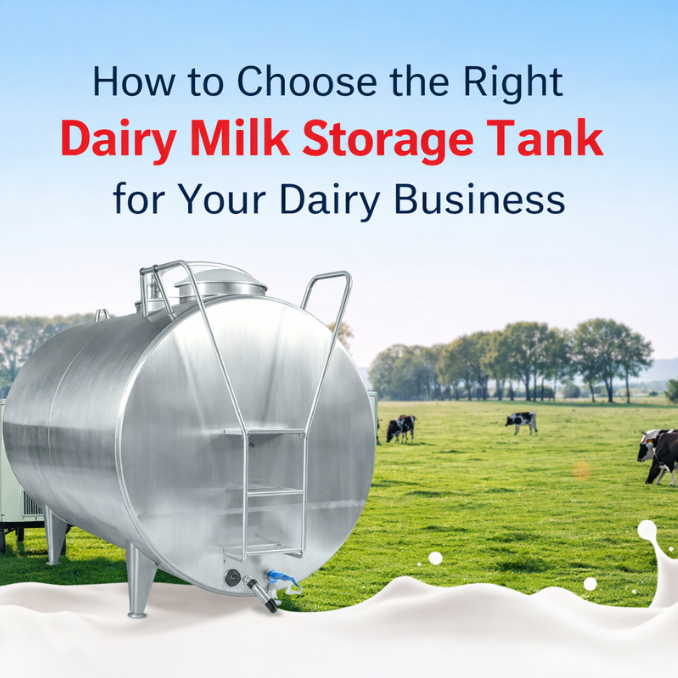
Milk is not a product that gives you second chances. From the moment it leaves the animal, its quality starts depending on how carefully it is handled. Heat, bacteria, air exposure, and even small delays can quietly reduce milk quality. That’s why choosing the right dairy milk storage tank is not just about equipment—it’s a decision that affects daily operations, buyer trust, and long-term business growth.
At Mahesh Eng. Works, we work closely with dairy farmers, milk collection centers, and small to medium dairy plants across India. We see the same questions come up again and again—about capacity, cooling, hygiene, power costs, and compliance. This guide is written to answer those questions in a clear and practical way, without technical jargon or sales pressure.
Why a Proper Milk Storage Tank Matters
Milk begins to lose quality the moment it is exposed to heat and bacteria. When storage conditions are not right, problems don’t always appear immediately. Sometimes they show up later, when fat or SNF values drop, or when milk gets rejected by buyers.
Improper storage often leads to faster bacterial growth, milk souring, and avoidable wastage. In some cases, it can even create compliance issues with food safety authorities. Over time, these small losses add up and start affecting profitability.
A well-designed milk storage tank helps maintain the right temperature, protects natural milk quality, and supports hygienic handling. It also reduces stress in daily operations and builds confidence with buyers. In simple terms, the right tank protects both your milk and your reputation.
Step 1: Understand Your Daily Milk Volume
Before looking at tank designs or prices, it’s important to be clear about how much milk you actually handle every day. This sounds basic, but many problems start here.
Think about how much milk you collect daily, whether milk is stored once or multiple times a day, and whether your collection is likely to increase in the next few years. Many dairy businesses grow gradually, and a tank that fits today’s needs may feel too small sooner than expected.
In India, small dairy farms usually work with tanks in the 300 to 500 liter range. Village-level collection centers often need 1000 to 2000 liters, while small dairy plants commonly use tanks between 3000 and 5000 liters. Medium-scale operations go even higher.
Choosing a tank with some extra capacity is always safer. A tank that is too small leads to rushed cooling, overflow risks, and hygiene challenges that are difficult to manage on busy days.
Step 2: Choose the Right Type of Milk Storage Tank
Not all milk storage tanks serve the same purpose. The right type depends on how long milk is stored and whether cooling is required immediately.
Milk storage tanks without cooling are generally used when milk is transported quickly for processing or when cooling is handled separately. These are common in processing plants where milk arrives already chilled.
Bulk milk cooling tanks, on the other hand, are designed to cool milk immediately after collection and maintain a stable temperature. They are ideal for dairy farms, milk collection centers, and locations where ambient temperatures are high. If milk is stored for more than a few hours, a cooling tank is not a luxury—it is a necessity.
Step 3: Material Quality and Why Stainless Steel Matters
Milk reacts easily with poor-quality metals. That’s why stainless steel has become the standard material in the dairy industry.
Food-grade stainless steel, especially SS 304, is safe for direct milk contact. It resists corrosion, does not affect milk quality, and is much easier to clean and sanitize. A smooth inner surface with proper welding ensures that milk residues do not get trapped, which helps maintain hygiene over time.
Low-grade steel or coated tanks may seem economical at first, but they often create contamination risks and tend to fail much earlier. In the long run, they usually cost more through repairs, replacements, or milk losses.
Step 4: Cooling Efficiency and Temperature Control
Milk should ideally be cooled to around 4°C as quickly as possible. Any delay gives bacteria the chance to multiply.
When evaluating a milk storage tank with cooling, look beyond just the cooling capacity on paper. Cooling speed, uniform temperature distribution inside the tank, and insulation quality all matter. In Indian weather conditions, poor insulation leads to higher electricity consumption and uneven cooling.
A well-insulated tank helps maintain temperature even during short power fluctuations, which is especially important in rural areas.
Step 5: Hygiene and Ease of Cleaning
No matter how good the cooling system is, hygiene cannot be compromised. Cleaning is not optional—it is critical.
A good milk storage tank should have a smooth, mirror-finish interior that is easy to clean. It should allow proper access for manual cleaning and support clean-in-place systems if required. Complete drainage without residue is also essential.
Poor tank design makes cleaning difficult and leads to bacterial buildup over time, even when daily cleaning routines are followed.
Step 6: Food Safety and FSSAI Compliance
Dairy businesses in India must follow FSSAI guidelines for milk storage and handling. Storage tanks play a major role in meeting these requirements.
A compliant tank supports hygienic milk handling, reliable temperature control, and easy inspection. Ignoring compliance can lead to milk rejection, penalties, or even operational shutdowns. Choosing the right tank helps you stay compliant without constant worry.
Step 7: Power Consumption and Operating Cost
Electricity is one of the biggest ongoing expenses in dairy operations. This is why power efficiency matters.
Energy-efficient compressors, proper insulation, and reliable components reduce monthly electricity bills and maintenance costs. While an efficient tank may cost more initially, it often saves money every month and pays for itself over time.
Step 8: Space, Location, and Installation
Before finalizing a tank, take a close look at your available space and workflow.
Consider how milk will be loaded and unloaded, whether drainage and water supply are adequate, and if there is enough ventilation for cooling systems. A poorly placed tank can disrupt daily operations and make cleaning more difficult than it needs to be.
Step 9: Plan for Future Growth
Many dairy businesses grow faster than expected. What works today may not be enough tomorrow.
When choosing a tank, think about future expansion. Can the tank handle higher volumes later? Is there space to add another tank if needed? Planning ahead helps avoid early replacement and unnecessary expenses.
Step 10: Choosing the Right Manufacturer
Even the best design will fail if manufacturing quality is poor. The experience and reliability of the manufacturer matter just as much as specifications.
Choose a manufacturer who understands Indian dairy conditions, uses quality materials, offers customization when required, and provides dependable after-sales support. Experience in dairy equipment makes a real difference.
At Mahesh Eng. Works, we design and manufacture milk storage tanks keeping real dairy challenges in mind—hygiene, durability, efficiency, and long-term value.
Frequently Asked Questions
What size milk storage tank is suitable for a small dairy business?
The right size depends on daily milk collection and storage time. Small dairy farms typically use tanks between 300 and 500 liters, while village collection centers often need 1000 to 2000 liters. Keeping some extra capacity is always recommended.
Is there a difference between a milk storage tank and a bulk milk cooling tank?
Yes. A milk storage tank mainly holds milk, while a bulk milk cooling tank also chills milk to around 4°C and maintains that temperature. For storage beyond a few hours, cooling tanks are essential.
Why is stainless steel preferred for milk storage tanks?
Food-grade stainless steel is safe for milk contact, easy to clean, resistant to corrosion, and has a long service life. It helps maintain hygiene and milk quality over time.
How long can milk be stored safely in a cooling tank?
When milk is cooled quickly and hygiene is maintained, it can usually be stored safely for 24 to 48 hours. Stable temperature and proper cleaning are key factors.
Final Thoughts
Choosing the right dairy milk storage tank is not about buying the biggest or cheapest option. It is about selecting a solution that protects milk quality, fits daily operations, and supports long-term business growth.
A well-chosen tank reduces losses, improves efficiency, supports compliance, and builds trust with buyers. If you are planning to invest in a new milk storage tank or upgrade your existing setup, take the time to understand your needs clearly.
For practical guidance, customization, or expert support, Mahesh Eng. Works is always ready to help dairy businesses choose equipment that works reliably in real-world conditions.