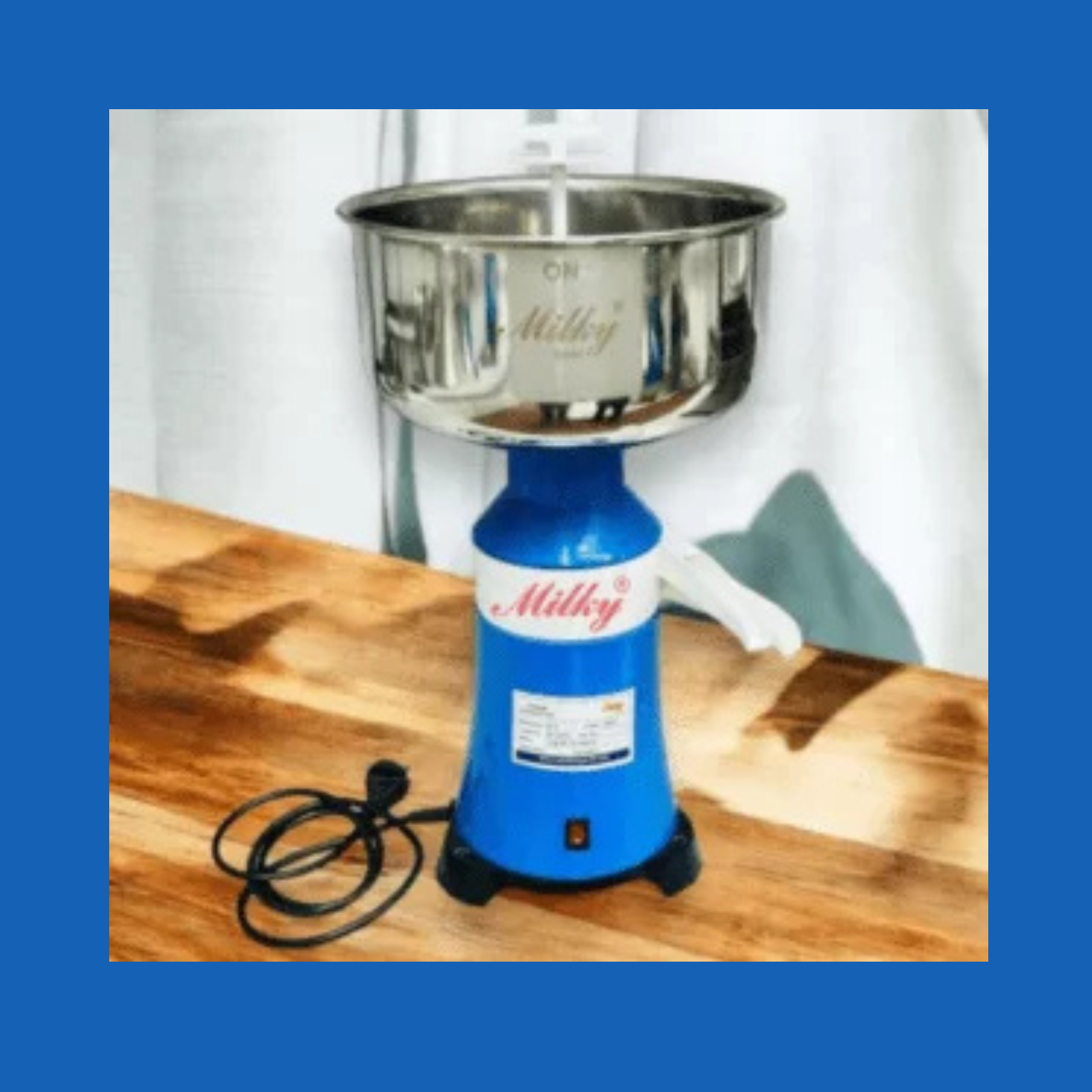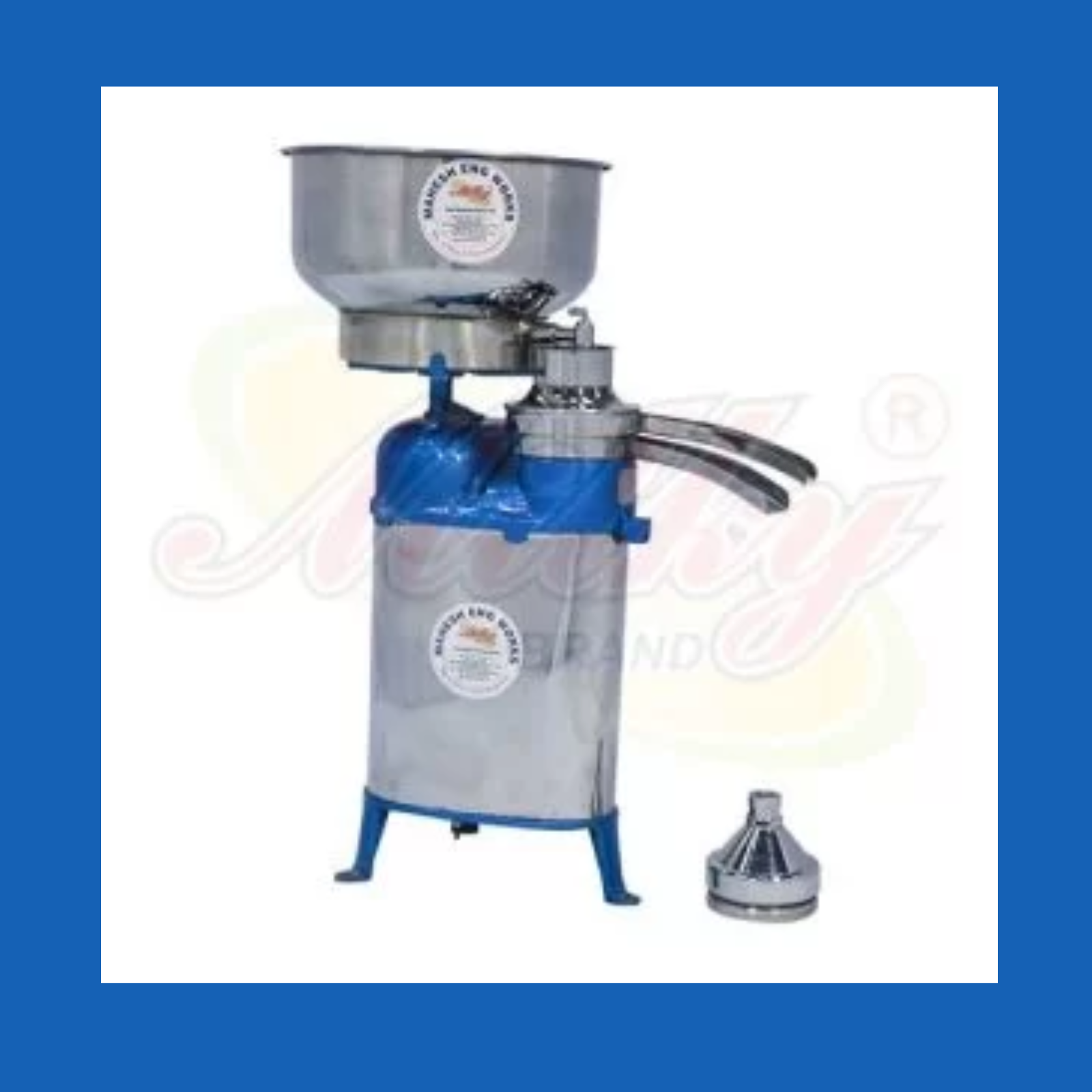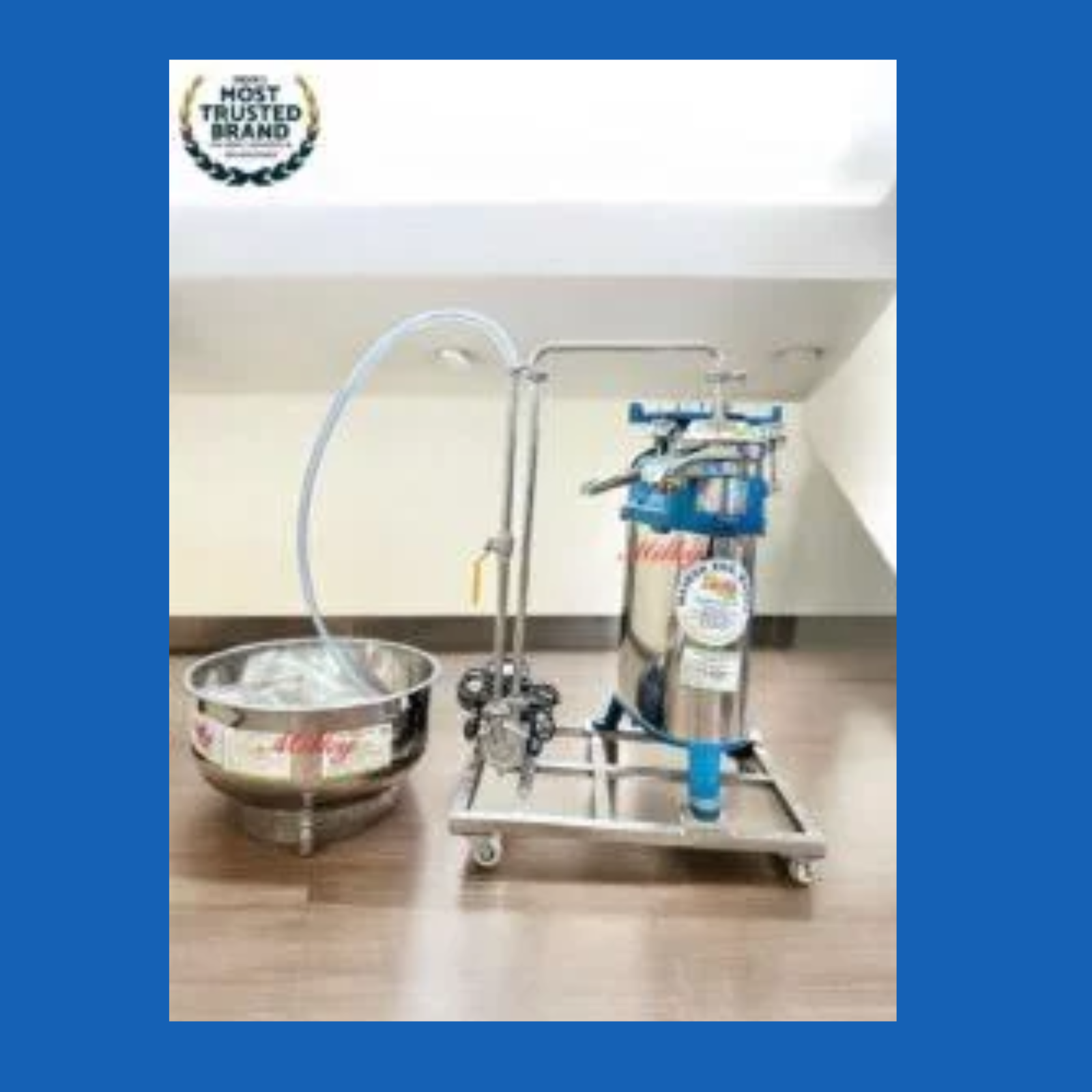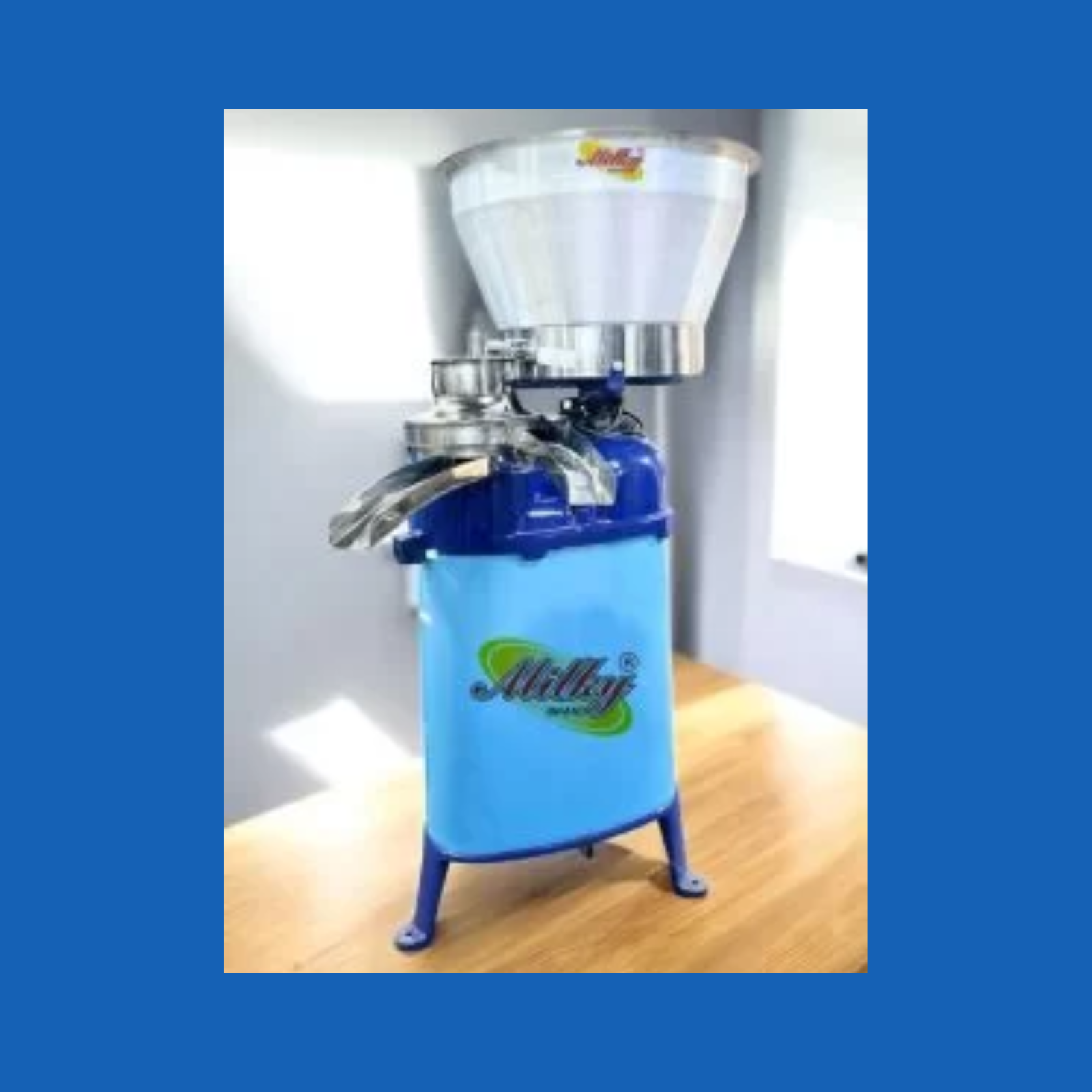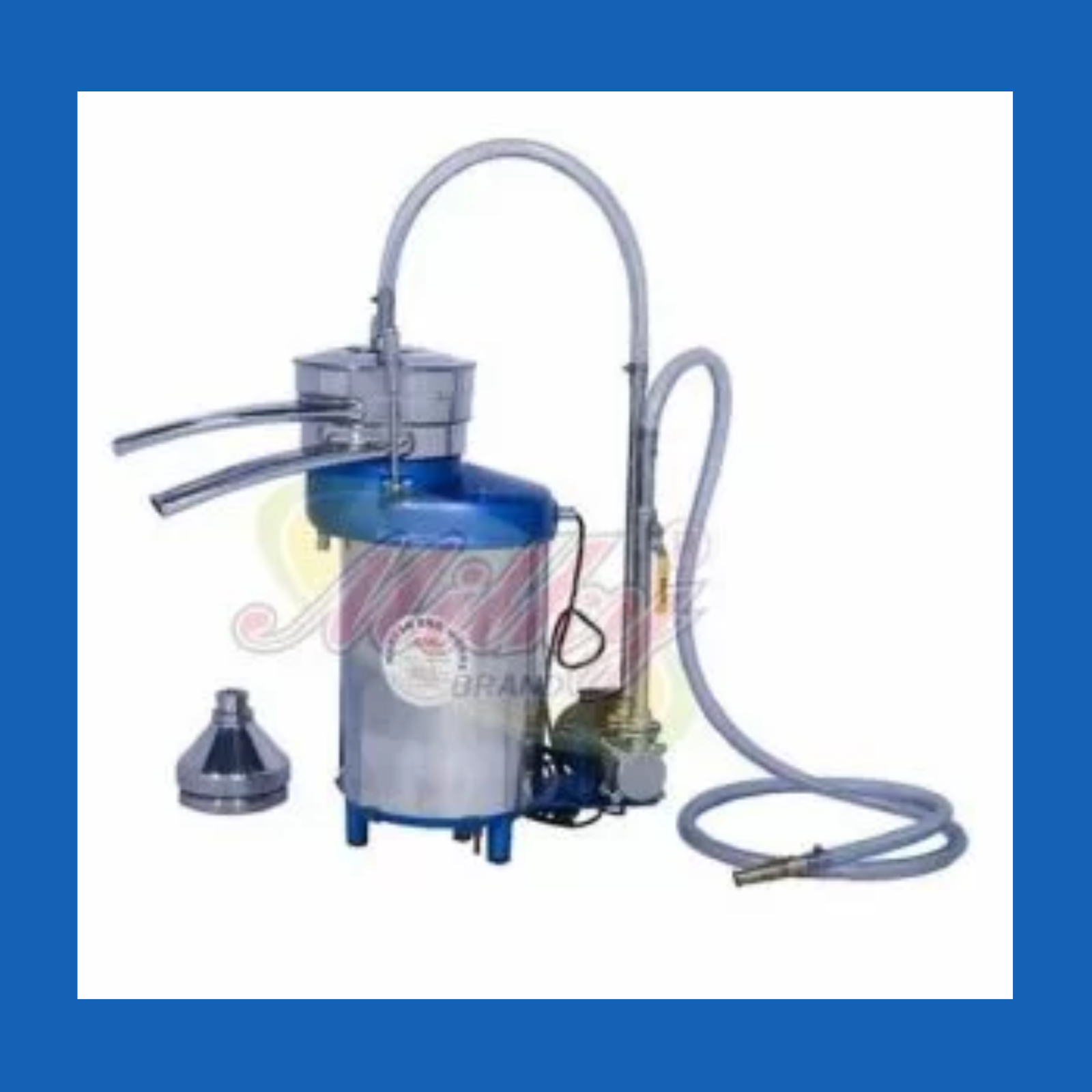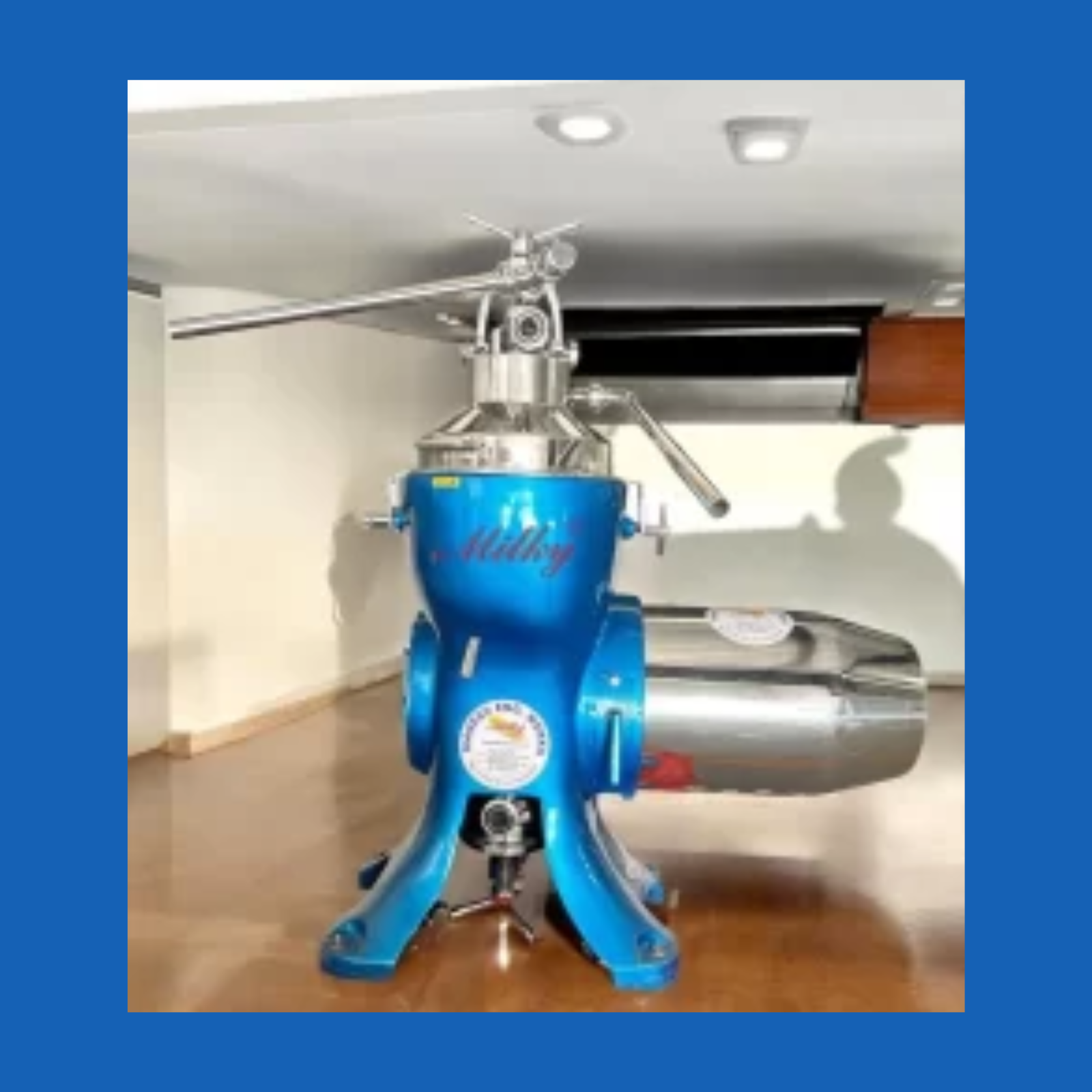
Damoh is one of Madhya Pradesh's key dairying districts, home to a large mixed population of cows and buffalo spread across its rural areas, where dairy farming provides a genuine secondary income for thousands of families. For dairy farms, milk collection points, and sweet shops across Damoh, this level of daily milk handling creates a serious issue when cream separation is still performed manually or relies on gravity-based settling fat is lost in the skim milk, output varies between batches, and manual milk separation simply can't keep up once daily volumes exceed a few animals.
A MILKY® Electric Cream Separator Machine from Mahesh Eng. Works directly addresses this challenge with continuous, high-speed centrifugal separation that recovers significantly more cream per litre than manual skimming, works with both cow and buffalo milk without any modifications, and delivers steady fat content batch after batch. Made from food-grade materials for hygienic, low-maintenance daily use, these machines are well-suited for dairy farms, milk collection centers, ghee-making units, and sweet manufacturing businesses throughout Damoh and the larger Sagar-Damoh dairy belt of Madhya Pradesh.
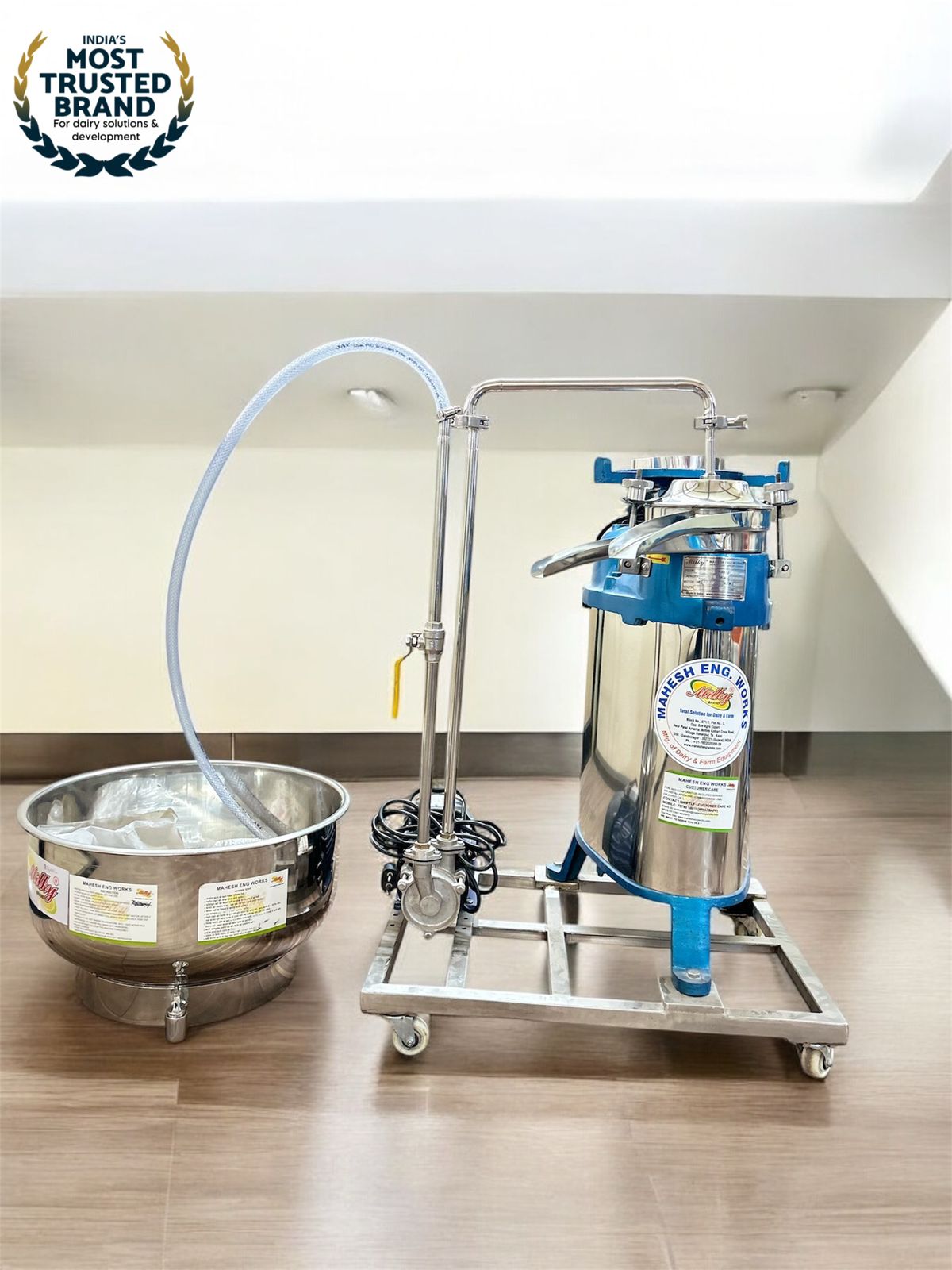 Installation Support
 Mahesh Eng. Works is an ISO 9001:2015 certified manufacturer based in Gandhinagar, Gujarat, with experience since 1980 across dairy equipment including Commercial Khoya Machine , milk cream separator machine, ghee clarifier machine, and paneer making machines. The company offers customized capacities, installation support, and after sales service for businesses across India.
MILKY® Cream Separator Machines are available from 80 LPH to 3,000 LPH, matching the range of dairy operations found across Damoh from individual farm households and small village collection points to larger sweet-manufacturing units and ghee producers. Smaller capacities suit on-farm separation for individual dairy owners, while larger models are built for collection centres and processing units handling higher daily volumes. Each model is available in MS or SS 304 construction depending on your requirement.
Choosing the right capacity depends on your daily milk volume and shift duration. Businesses planning to scale often choose a model slightly above their current need to avoid early equipment upgrades.
| No. | Technical Data | 80 LPH Model | 300 LPH Model | 500 LPH Model | 750 LPH Model | 1000 LPH Model | 3000 LPH Model |
|---|---|---|---|---|---|---|---|
| 1 | Capacity | 60–165 LPH | 300 LPH | 500 LPH | 750 LPH | 1,000 LPH | 3,000 LPH |
| 2 | Bowl Material | S.S. 304 | M.S. / S.S. 304 | Mild Steel | Mild Steel | S.S. 304 | S.S. 304 |
| 3 | Motor Capacity | 0.08 HP, Single Phase | 0.25–0.5 HP, Single Phase | 0.50 HP, Single Phase | 0.50 HP, Single Phase | 1.00 HP, Three Phase | 5 HP, Three Phase |
| 4 | Motor Speed | 1425 RPM | 1425 RPM | 1425 RPM | 1425 RPM | 1425 RPM | 1425 RPM |
| 5 | No. of S.S. Discs | 15–17 | 25 | 40 | 40 | 40 | 65–75 |
| 6 | Tank Capacity | 5 LTR | Aluminium / S.S. 304 | 40 LTR | 40 LTR | - | - |
| 7 | Separation Temperature | 35–40°C | 35–40°C | 35–40°C | 35–40°C | 35–40°C | 35–40°C |
| 8 | Fat Separation Efficiency | 90–95% | 90–95% | 90–95% | 90–95% | 90–95% | 90–95% |
Download Full Brochure
Get drawings, full specifications, layout requirements and pricing on email.
MILKY® Cream Separator Machines are designed around the practical needs of dairy and sweet businesses. Key features include:

Centrifugal separation recovers 95–98% of available fat.

SS 304/316 construction meets dairy hygiene standards.

Set output fat percentage to suit ghee, butter, or ice cream production.

No batch cycle; runs through the entire milk receiving session.

Smooth bowl and disc surfaces for quick strip-down between sessions.

Standard bearings and seals; no proprietary parts

Motor sized to capacity; low running cost per litre processed.

On-farm cream separation for ghee or direct cream sale.

Cream recovery and milk standardization before dispatch

Fat standardization for toned, double-toned, and full-cream milk.

Fat adjustment of milk before processing.

Fresh cream for peda, burfi, and other mithai production.

Cream at consistent fat percentage for mix preparation.

95–98% fat recovery vs. 70–80% with manual methods.

Less fat retained in skim milk means more value from each litre.

Uniform fat content batch after batch.

One operator manages the machine vs. multiple staff for manual skimming.

Closed separation system reduces milk exposure

Handles 100 to 3,000 LPH within the milk receiving window.

Additional cream recovered typically pays back the machine cost within 12–18 months.
Divide litres/day by available shift hours to find minimum LPH needed.
Choose a model 20–25% above your current peak to allow for growth.
Single phase (220V) for up to 500 LPH; three phase (415V) for larger models.
Ghee plants need high cream volume; ice cream plants need specific fat %.
Twice-daily processing suits quick strip-down; larger plants may prefer CIP.
Free capacity sizing and technical advisory before purchase.
The price of a milk cream separator machine depends on capacity, motor specification, material grade, and automation level. For dairy farms and collection points across Damoh, where daily milk volumes range from a handful of animals at the household level to larger sweet-manufacturing and ghee-processing operations, capacity is the biggest driver of price, followed by construction grade (MS vs SS 304) and motor type (single phase vs three phase).
A basic 80–300 LPH model suited to an individual dairy farm or small collection point costs considerably less than a 1,000 LPH or 3,000 LPH machine built for a busy processing unit. Since requirements vary by operation, Mahesh Eng. Works provides custom quotations based on your specific milk volume and production needs in Damoh.
Mahesh Eng. Works supplies MILKY® Milk Cream Separator Machines to dairy farms, milk collection points, ghee units, and sweet manufacturers across Damoh, including Hatta, Patera, Jabera, Batiyagarh, Tendukheda, and Patharia tehsils. The team coordinates delivery based on your location and provides installation support to help businesses set up their equipment correctly from day one.
Get Quote for Your CityCream separator machine prices in Damoh typically start at around ₹10,000 for an 80 LPH manual model. A 500 LPH electric cream separator generally costs ₹25,000–₹75,000, while 3,000 LPH industrial machines can cost ₹7 lakh or more. The final price depends on machine capacity, construction material (MS, SS 304, or SS 316), and motor specifications. Prices are exclusive of 18% GST. Contact Mahesh Eng. Works with your daily milk processing capacity for an accurate quotation.
Yes. Since most dairy holdings in Damoh keep a mix of indigenous cattle and buffaloes rather than a single breed, a MILKY® machine is built to process both you only adjust the cream screw setting when the fat content shifts between cow and buffalo milk batches.
For farms processing even a modest daily volume, an 80–100 LPH entry-level model recovers noticeably more fat than hand-skimming or letting milk settle overnight, and the additional cream typically covers the machine's cost well within a year. It's a common first upgrade for household-level dairy owners in Damoh looking to add ghee or paneer as a side income.
Yes. We regularly supply to Damoh town and surrounding tehsils including Hatta, Patera, Jabera, Batiyagarh, Tendukheda, and Patharia. Delivery timelines and installation visits are scheduled once your order is confirmed, and our team walks you through setup and first operation on-site.
Models up to 500 LPH run on standard single-phase (220V) power, which suits most rural Damoh locations where three-phase supply isn't guaranteed. Only the 1,000 LPH and 3,000 LPH industrial models require three-phase connections factor your local power supply into your capacity decision, and our team can advise during the enquiry stage.
Yes. If your Damoh-based unit processes milk further into ghee, paneer, or khoya, we can adjust capacity, motor rating, and inlet/outlet fittings to match that downstream workflow share your process at the enquiry stage and we'll recommend the right configuration.
All milk-contact surfaces are food-grade SS 304 stainless steel, which resists corrosion from routine cleaning regardless of local water hardness. SS 316 is available if you need extra resistance for more demanding cleaning regimes.
A correctly operated MILKY® machine at 35–40°C milk temperature recovers 95–98% of available fat, versus the 70–80% typical of manual skimming or overnight settling methods still common on smaller Damoh farms. That difference in recovered cream is usually the main reason first-time buyers upgrade.
Alongside individual dairy farms, buyers include village-level milk collection points, small ghee-making units, and sweet shops that need a steady cream supply for local mithai production. Anyone handling raw milk regularly in the district benefits from switching from manual separation.
Talk to Mahesh Eng. Works today for the latest price, technical guidance, capacity recommendation, and machine configuration.