

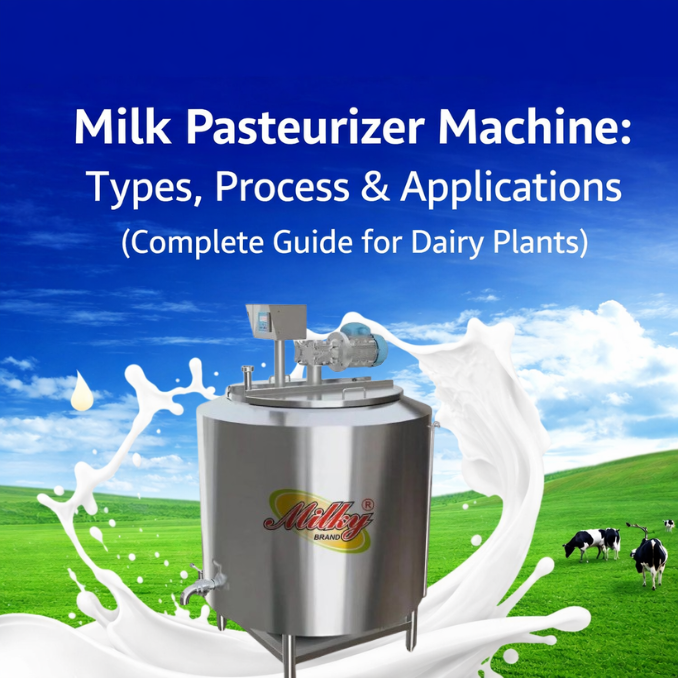
Milk safety isn’t something a dairy business can afford to take lightly. Whether you’re running a small local unit or managing a growing processing plant, pasteurization sits at the center of product quality, compliance, and long-term profitability.
A milk pasteurizer machine simply does one essential job — it heats raw milk to a controlled temperature for a specific time and then cools it quickly. That controlled heating destroys harmful bacteria while keeping the milk’s nutrition and taste intact.
If you’re planning to install or upgrade a pasteurization system, this guide will walk you through:
- What a milk pasteurizer machine actually does
- How the pasteurization process works inside a dairy plant
- The different types of pasteurizers
- Where they are used
- How to choose the right capacity
- What really affects pricing
- Common buying mistakes to avoid
What is a Milk Pasteurizer Machine?
A milk pasteurizer machine is a dairy processing system designed to make raw milk safe for consumption and further processing.
Raw milk can contain harmful bacteria such as:
- Salmonella
- Listeria
- E. coli
- Mycobacterium tuberculosis
Pasteurization reduces these pathogens to safe levels by applying heat in a controlled manner, followed by rapid cooling.
The goal isn’t just safety. It’s consistency. Proper pasteurization improves shelf life and ensures that products like curd, paneer, and yogurt perform reliably during production.
In most regulated markets, pasteurization is mandatory for commercial milk sales.
Why Pasteurization Matters for Dairy Businesses
From a practical business point of view, pasteurization directly affects your bottom line.
It helps you:
- Meet food safety regulations
- Extend milk shelf life
- Reduce spoilage losses
- Maintain consistent product quality
- Protect brand reputation
- Expand into value-added products
Many dairy owners realize the importance of pasteurization only after facing complaints about shelf life or inconsistent curd setting. A stable pasteurization system prevents these issues before they begin.
Milk Pasteurization Process (Step-by-Step Inside a Plant)
Let’s look at how this works in a real processing setup.
1. Milk Reception and Filtration
Raw milk arrives at the plant and passes through filtration to remove physical impurities.
2. Pre-Heating
Using heat exchangers, milk is pre-heated. This improves energy efficiency and reduces steam consumption.
3. Heating
Milk is heated to a specific temperature depending on the pasteurization method being used.
4. Holding
The milk is maintained at that temperature for a defined period. This stage ensures microbial destruction.
5. Rapid Cooling
Milk is immediately cooled to around 4°C or below to prevent bacterial growth.
6. Storage or Further Processing
After pasteurization, milk is either stored in chilled tanks or sent for processing into products like curd, cheese, or flavored milk.
The key here is temperature accuracy and holding time control. Even small variations can affect shelf life and product performance.
Types of Milk Pasteurizer Machines
Different dairies require different systems. Choosing the right type depends mainly on daily capacity and future expansion plans.
Batch Pasteurizer (Vat Pasteurizer)
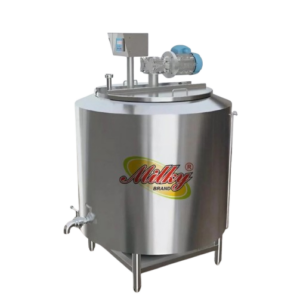 BATCH MILK PASTEURIZER 500 LTR (BMP)
Also known as LTLT (Low Temperature Long Time) pasteurizer.
Process:
- Heated to 63°C
- Held for 30 minutes
- Cooled immediately
Best suited for:
- Small dairy plants
- 100–1000 litres per day
- Startups and cooperative units
Advantages:
- Lower initial investment
- Simple to operate
- Easy to maintain
Limitation:
- Slower production cycle
- Not suitable for high-volume processing
For small dairies focusing on curd or paneer production, batch systems are often practical and economical.
HTST Pasteurizer (High Temperature Short Time)
This is the most commonly used system in medium and large dairy plants.
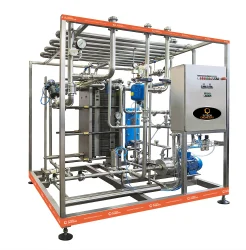
Source:HTST Milk Pasteurizer 300 LPH
Process:
- Heated to 72°C
- Held for 15 seconds
- Rapid cooling
Best suited for:
- 2000 litres per day and above
- Continuous processing environments
Advantages:
- Higher throughput
- Better energy efficiency
- Consistent output quality
- Suitable for automation
Limitation:
- Higher initial investment compared to batch systems
HTST systems use plate heat exchangers, which allow heat recovery. Over time, this significantly reduces operating costs.
- UHT Pasteurizer (Ultra High Temperature)
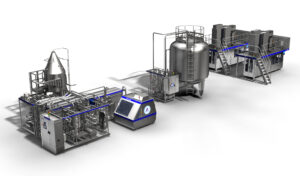
Source: Ultra-high-temperature processing
Process:
- Heated to 135–150°C
- Held for 2–5 seconds
Best suited for:
- Long shelf-life milk
- Aseptic packaging systems
Advantages:
- Shelf life up to 6 months
- No refrigeration required before opening
Limitation:
- High capital investment
- Requires specialized packaging setup
UHT systems are typically used by large dairy brands with wide distribution networks.
Applications of a Milk Pasteurizer Machine
A pasteurizer isn’t only for packaged drinking milk. It is a foundation step for producing:
- Toned milk
- Full cream milk
- Curd (Dahi)
- Yogurt
- Paneer
- Cheese
- Flavored milk
- Buttermilk
- Ice cream base
- Ghee (as a pre-treatment step)
Without proper pasteurization, product consistency becomes unpredictable.
How to Choose the Right Milk Pasteurizer
Before selecting a machine, consider the following:
1. Daily Milk Handling Capacity
Look at realistic daily averages, not just peak seasonal numbers.
2. Expansion Plans
Choose a system that allows at least 30–40% growth in capacity.
3. Utilities Available
- Steam boiler capacity
- Electrical load
- Chilled water availability
4. Automation Requirements
Manual, semi-automatic, or fully automatic — depending on your workforce and scale.
5. Material Quality
Ensure food-grade stainless steel (SS 304 or SS 316).
6. Compliance
Check alignment with FSSAI and other local food safety standards.
Capacity Guide (General Reference)
| Dairy Size | Daily Capacity | Recommended Pasteurizer |
| Small | 100–1000 L | Batch Pasteurizer |
| Medium | 1000–5000 L | HTST Pasteurizer |
| Large | 5000+ L | HTST or UHT |
What Affects Milk Pasteurizer Machine Price?
Instead of asking only about price, evaluate:
- Processing capacity (LPH)
- Automation level
- Heat exchanger efficiency
- Control panel configuration
- CIP system integration
- Insulation quality
- After-sales service
A well-selected pasteurizer reduces long-term operational losses and improves overall return on investment.
Common Mistakes Dairy Owners Make
- Choosing undersized equipment
- Ignoring heat recovery systems
- Compromising on stainless steel grade
- Buying based only on quotation price
- Not planning for future expansion
Many of these mistakes become expensive to correct later.
Frequently Asked Questions
What is the difference between batch and HTST pasteurizers?
Batch systems process milk in fixed quantities, while HTST systems operate continuously and are suitable for larger volumes.
What temperature is used in milk pasteurization?
Typically 63°C for 30 minutes (LTLT) or 72°C for 15 seconds (HTST).
How long does pasteurization take?
Depending on the method, anywhere from 15 seconds to 30 minutes.
Can pasteurizers be used for flavored milk?
Yes. Pasteurization is required before flavoring and packaging.
Conclusion:
A milk pasteurizer machine is more than a piece of equipment. It directly influences product safety, shelf life, consistency, and business scalability.
Choosing the right system improves:
- Product stability
- Regulatory compliance
- Operational efficiency
- Profit margins
- Long-term growth potential
Installing a milk pasteurizer is not just a purchase — it’s a long-term process decision that impacts safety, efficiency, and profitability.
If you’re planning:
- A new dairy plant setup
- Capacity expansion
- Shift from batch to HTST
- Improvement in energy efficienc
- Better process control
Talk to the engineering team at Mahesh Eng. Works before finalizing your specifications. We help dairy businesses choose equipment that fits their scale today and supports growth tomorrow.

Mahesh Eng. Works
Written by Mahesh Engineering Works, specializing in precision dairy machinery and hygienic stainless-steel dairy solutions for small and medium dairy plants in India.