

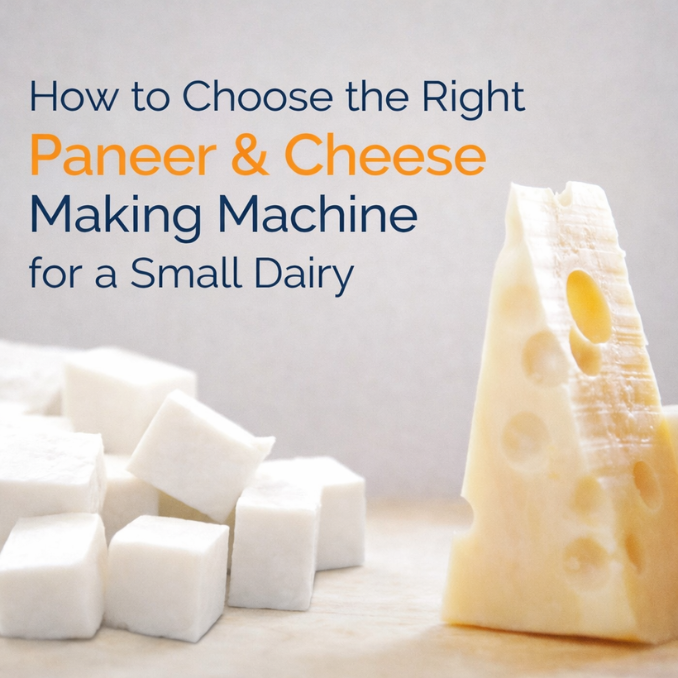
Choosing the right paneer and cheese making machine can shape the future of a small dairy business. What begins as a manual, time-consuming process often reaches a point where efficiency, consistency, and hygiene become hard to maintain without the right equipment. As demand for paneer continues to grow across India, many small dairies are upgrading their processing setup to stay competitive and profitable.
Today, paneer processing equipment is available in many forms—from basic milk heating units to semi-automatic and fully automated systems. The challenge isn’t finding a machine. It’s choosing one that fits your actual production needs, available space, and long-term plans without overinvesting or limiting future growth.
A machine that works well for a 100-litre operation may not suit a growing dairy producing several hundred litres a day. That’s why understanding the fundamentals before buying is essential, especially when machinery represents a large share of your investment.
What Really Matters When Selecting a Paneer Making Machine
Many buyers focus on price first, but experienced dairy operators know that the real value of a paneer machine shows up during daily use. Build quality, ease of operation, energy consumption, and after-sales support often matter more than the initial cost.
Build Quality and Material
Stainless steel construction is non-negotiable in dairy processing. It ensures hygiene, prevents contamination, and withstands constant exposure to moisture and heat. While SS 304 is common, higher-grade stainless steel such as SS 316L offers better resistance to corrosion and longer service life, especially in continuous or high-moisture environments.
Level of Automation
Automation directly affects labor cost and product consistency.
- Manual machines require close operator attention and are best suited for very small operations.
- Semi-automatic paneer machines automate critical steps like milk heating and temperature control while keeping costs manageable.
- Fully automated systems offer maximum consistency but require higher investment and technical support.
For most small dairies, semi-automatic machines strike the right balance between control, efficiency, and affordability.
Energy Efficiency
Electricity costs add up quickly in dairy operations. Machines designed with efficient heating systems and controlled power usage can reduce long-term operating expenses. Even modest energy savings make a noticeable difference over time.
Choosing the Right Production Capacity
Production capacity should reflect both current demand and realistic growth over the next few years. Most small dairies process between 50 and 500 litres of milk per day, but the exact requirement depends on your market, distribution reach, and product range.
A common mistake is buying equipment that only meets today’s needs. As demand increases, that machine becomes a bottleneck. On the other hand, oversizing equipment leads to wasted energy and unused capacity.
A practical approach is to select a paneer making machine with 20–30% extra capacity beyond your current maximum output and confirm whether the system can be upgraded later with additional components.
Seasonal demand also matters. Festivals and bulk orders can temporarily push production higher, and your equipment should be able to handle these spikes without compromising quality.
Space and Layout Planning for Small Dairies
Even the best machine won’t perform well in a poorly planned space. While paneer machines themselves may not occupy much floor area, the surrounding layout plays a major role in efficiency and hygiene.
Proper ventilation is essential, as paneer production generates steam and moisture. Adequate clearance around machines makes cleaning and maintenance easier, while correct placement of utilities—power, water, and drainage—prevents costly installation changes later.
A smooth workflow from milk reception to pressing and packaging reduces handling time and contamination risk. Storage space for raw materials, finished paneer, and cleaning supplies should also be considered during layout planning.
Automation and Technology in Modern Paneer Processing
Automation has made consistent paneer quality achievable even for small dairies. Temperature control systems are especially important, as slight variations during heating and coagulation can affect texture, yield, and shelf life.
Many modern paneer machines include digital temperature controllers that maintain precise conditions without constant supervision. Some systems also allow batch tracking, helping operators identify variations and improve consistency over time.
That said, more technology isn’t always better. Small dairies benefit most from automation that simplifies work rather than complicates it. The goal is to support your process—not overwhelm it.
How to Match the Machine to Your Dairy’s Needs
Before finalizing any paneer or cheese making machine, focus on three essentials:
- Daily milk processing volume
- Consistency and quality requirements
- Ease of integration into your existing workflow
Calculate expected output in kilograms of paneer, not just litres of milk. For many small dairies, processing 50–200 litres per day offers a strong balance between production and investment.
Pay close attention to the pressing system. Adjustable pressure settings allow better control over paneer texture and moisture content. Equipment made with food-grade materials and designed for easy cleaning helps meet food safety requirements and reduces downtime.
A Practical Example from a Small Dairy
A small, family-run dairy that relied on manual paneer production was processing about 200 litres of milk per day. Rising labor costs and inconsistent quality began affecting their local sales.
After switching to a semi-automatic paneer making machine, they increased production without adding staff. Over time, they expanded their product range using modular equipment that worked with their existing setup. Within a year, their output and margins improved significantly.
Their success came from choosing equipment that allowed growth, focusing on quality first, and working with a supplier who provided reliable support.
Food Safety, Compliance, and Quality Control
Paneer production demands strict hygiene. Reliable machines use food-grade stainless steel and allow thorough cleaning between batches. Accurate temperature control ensures proper pasteurization and safe coagulation.
While machines play a major role, consistent cleaning routines, staff training, and routine maintenance are just as important. Together, these practices protect product quality and build long-term customer trust.
Limitations to Consider Before Investing
Every system has limits. Semi-automatic and automated machines require stable power supply and adequate water pressure. Some machines are designed for specific recipes and may not adapt easily to new products.
Maintenance requirements also increase with automation, which can be a challenge in areas with limited technical support. Seasonal changes in milk composition can affect yield, requiring small process adjustments.
Understanding these factors early helps avoid unrealistic expectations.
Key Takeaways for Small Dairy Owners
- Choose capacity based on consistent demand, not occasional peaks
- Semi-automatic paneer making machines offer the best balance for most small dairies
- Energy efficiency and layout planning directly impact long-term costs
- Food-grade construction and easy cleaning are essential
- Reliable support matters more than the lowest price
With the right machine, paneer production becomes more consistent, scalable, and profitable.
Final Thoughts
Selecting a paneer and cheese making machine is not just about equipment—it’s about setting up your dairy for steady growth and reliable quality. When capacity, automation, and build quality align with your goals, even small dairies can produce professional-grade paneer with confidence.
Take time to compare options, request demonstrations, and plan installation and training properly. A well-chosen machine today can support your dairy for years to come. For dairy entrepreneurs aiming to diversify, Mahesh Eng. Works provides efficient paneer and cheese making machines tailored for Indian dairy setups, helping you produce high-quality products with ease and consistency.
Frequently Asked Questions
What factors should I consider when selecting a paneer making machine for my small dairy?
Key factors include production volume, material quality, automation level, energy efficiency, and space requirements to ensure optimal operation.
How can I determine the right production capacity for my cheese making machine?
Consider your current demand and future growth projections, aiming for equipment rated 20-30% above your maximum daily production needs.
What type of stainless steel is best for a paneer press machine?
Food-grade 316L stainless steel is recommended for its superior durability and corrosion resistance in high-moisture dairy environments.
Why is energy efficiency important in dairy equipment?
Modern machines with heat recovery systems can reduce energy consumption by 20-30%, lowering operational costs and enhancing profitability.
What layout considerations should I keep in mind for my small dairy machine?
Ensure adequate ventilation, optimize workflow to minimize cross-contamination, and plan for necessary utility connections to enhance operational efficiency.