

Introduction
Mango pulp is the backbone of juices, ice creams, dairy products, and export-grade food processing—but have you ever wondered mango pulp machines work? A mango pulp processing machine makes this transformation fast, efficient, and contamination-free, helping processors extract up to 90% usable pulp while preserving natural color, flavor, and nutrients. Whether you’re running a small fruit processing unit or a large commercial plant, understanding how a mango pulp machine works is the first step toward improving yield, consistency, and profitability.
What You’ll Need to Understand the Process
Before we dive into how a mango pulping machine operates, let’s cover the basics. Modern mango pulp machine have several moving parts that work together to turn whole mangoes into smooth pulp.
Here’s what you typically need: a washing system to clean the fruit, a cutting mechanism to chop them up, the main pulping unit with rotating screens, and chambers to separate peels and seeds. Most commercial machines can handle anywhere from 500 to 2000 kg per hour, depending on how big your operation is.
It’s crucial to know how feed rate, screen mesh size, and final pulp texture go hand in hand. The process uses centrifugal force and precise screens to get the texture just right while keeping the fruit’s integrity. Also, knowing how to clean the machine properly is key to ensuring your product stays top-notch and free from contamination.
Once you’ve got these basics down, the actual processing steps become a breeze.
Step 1: Preparing the Mangoes for Processing
Getting your mangoes ready is crucial for making quality pulp. The mango pulp extraction machine needs uniformly prepared fruit to work its magic.
Raw Material Selection
Pick mangoes that are just right—not too hard, not too soft. Overripe mangoes can clog the machine, while underripe ones don’t give much pulp and need more power to process.
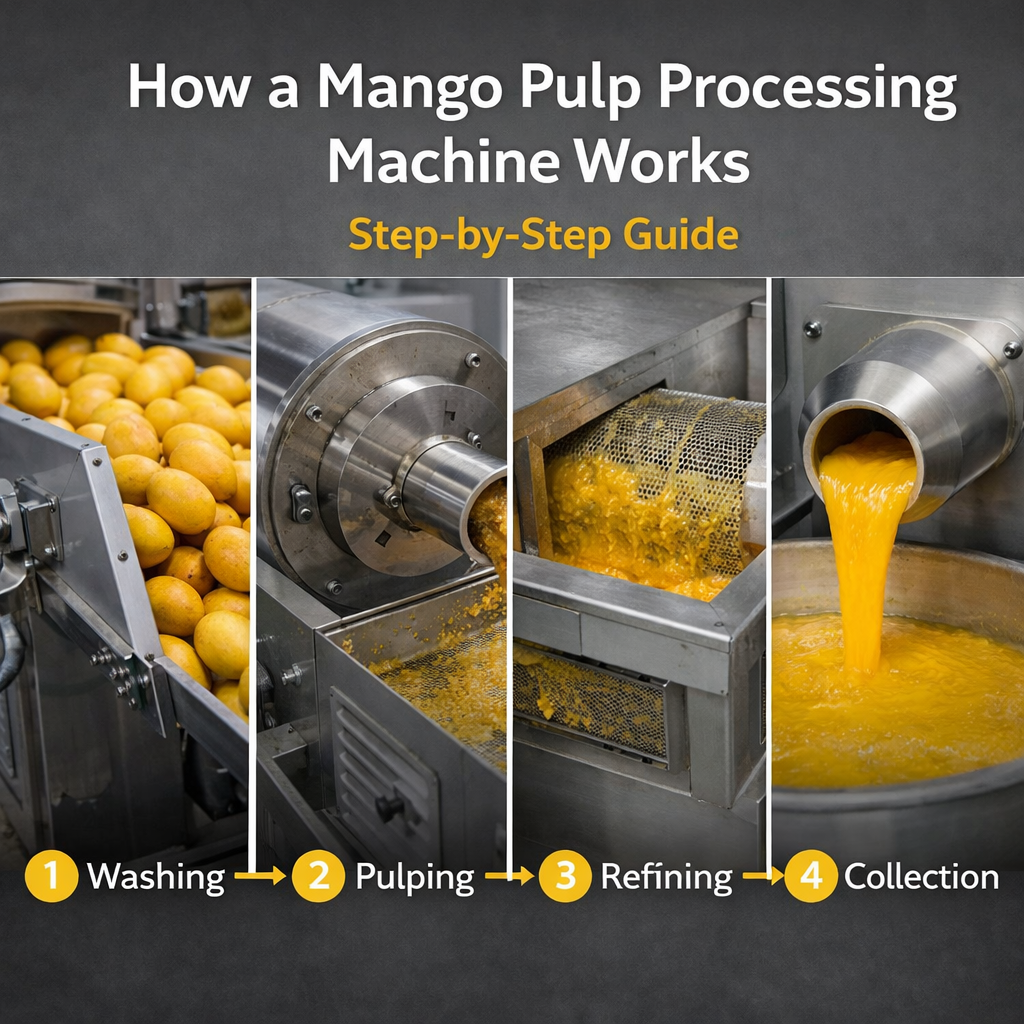
Cleaning and Washing
Wash away dirt, debris, and any other stuff with clean water. Big operations usually use multi-stage washing with food-safe sanitizers to get rid of any nasties. This step keeps your line free from contamination.
Size Grading and Sorting
Sort the mangoes by size for even processing times and consistent quality. Toss out any damaged or bad fruit. Most commercial places use automated sorting systems that can handle tons per hour and still keep everything up to standard.
With your mangoes all set, you’re ready to move on to the feeding phase, where the real action begins.
Step 2: Feeding Mangoes into the Machine
Your mangoes are prepped and ready to go. Now, feeding them into the machine is the next big step. Modern fruit pulp machines have special feeding systems to keep things flowing smoothly and avoid jams.
The feeding hopper, made from food-grade stainless steel, can handle different batch sizes based on your machine’s capacity. Industrial models can deal with 1000 kg/hr or more, so feeding them right is crucial.
Load mangoes gradually into the hopper instead of dumping them all at once. This controlled method prevents overloading and ensures even processing. The machine’s conveyor or gravity feed will move the mangoes to the crushing chamber at just the right pace.
Most commercial machines have adjustable feed controls, so you can tweak the flow based on fruit size and ripeness. Overripe mangoes need slower feeds to avoid clogs, while firmer ones can go through faster.
Keep an eye on the feeding process during the first few minutes to make sure everything’s running smoothly. This sets the stage for efficient pulp separation in the next step.
Step 3: The Pulp Extraction Process
Now that the mangoes are in the machine, the mango pulp processing kicks off with a high-tech separation system. The process involves crushing, screening, and filtering in perfect harmony.
First up, crushing rollers or paddles break down the mango flesh gently. They spin at controlled speeds—usually between 300-500 RPM—to make sure the fruit breaks down well without harming the pulp. Modern systems can process up to 1000 kg of mangoes per hour in this phase.
Next, the screening mechanism comes into play. Stainless steel mesh screens with precise openings let the smooth pulp pass through while holding back seeds, fibers, and peels. The screen size usually ranges from 0.5mm to 1.5mm, depending on what texture you want.
Continuous waste ejection happens at the same time, with unwanted bits automatically kicked out through special outlets. This keeps the system from clogging and maintains a steady flow. The whole extraction takes about 2-3 minutes per batch, with continuous-feed systems keeping things moving.
The pulp comes out smooth and ready for the next step: collection.
Step 4: Collection and Storage of Mango Pulp
After the mango pulper finishes its job, the freshly processed pulp flows into collection tanks or containers. Most commercial setups have stainless steel collection vessels under the machine to keep things clean and prevent contamination.
Keeping the pulp at the right temperature is crucial here. The pulping process creates heat that can mess with quality. Many places use cooling systems or chilled tanks to keep the pulp’s flavor and extend its shelf life.
Storage depends on what you’re doing next. If you’re turning the pulp into juice right away, temporary tanks with gentle stirring keep it consistent. For longer storage, pasteurize it first, then use aseptic packaging or freezing to lock in taste and texture.
Quality checks during collection include:
- Checking for consistency
- Ensuring color uniformity
- Making sure there are no leftover fibers
This ensures the mango pulper did its job right and the product meets standards. Now, let’s explore the technical aspects that make all this efficiency possible.
Technical Aspects of Mango Pulp Processing Machines
Let’s talk about the engineering behind these fruit pulper systems. They’re built with sophisticated components to tackle the unique challenges of mango processing. Most machines use stainless steel to meet food standards and resist the acidic nature of mango pulp.
Motor specifications usually range from 2-15 HP, depending on how much they can process. Industrial units can handle 1000 kg/hour or more. The pulping chamber has mesh screens with apertures ranging from 0.6mm to 2.0mm, letting operators control pulp texture.
Control systems in advanced models feature:
- Variable speed drives
- Automatic feeding mechanisms
- Temperature monitoring
Multi-purpose configurations can process different fruits, making them versatile for food processing facilities.
Still, technical complexity varies by manufacturer, and high-capacity units need a lot of maintenance. Understanding these technical details is crucial when picking the right machine, though some misconceptions can cloud your judgment.
Common Misconceptions About Mango Pulp Processing
Despite how common commercial pulp extraction systems are, myths still float around about mango processing. One big myth is that machines make lower-quality pulp than manual methods. In reality, modern pulping systems keep quality high while cutting out human contamination risks.
Another misunderstanding is about capacity. Some think industrial machines need huge amounts of fruit to run efficiently. But scalable pulping solutions work for both small and large operations, handling from 100 kg/hr to several thousand kilograms per hour.
People also wrongly believe these machines waste a lot of fruit. Actually, modern extraction technology maximizes yield by using parts of the fruit that manual methods often waste. Advanced screens make sure everything’s separated perfectly while keeping nutrients.
Cost worries also scare off potential buyers who think maintenance is too pricey. In reality, stainless steel construction and simple designs cut down on upkeep, with many seeing lower costs after just one season.
These myths often stop businesses from adopting efficient solutions that could revolutionize their mango operations.
Example Scenarios: Real-World Applications
To really understand how mango pulp machines work, let’s look at some real-world examples. A mid-sized juice factory usually runs 1000 Kg/Hr pulping machines during mango season, processing fruit quickly to keep flavors and nutrients fresh.
In commercial beverage production, operators use double-channel mango pulp systems to handle different fruit sizes at once. This setup lets them process both large Alphonso mangoes and smaller types without needing to change equipment, boosting efficiency during the short mango season.
Small organic producers often use stainless steel mango pulp machines for high-end products. They usually process 200-500 kg per hour, focusing on gentle methods to keep flavors intact for gourmet and baby food markets.
But, to succeed, you’ve got to think about specific challenges and equipment limits that could affect your processing.
Limitations and Considerations in Mango Pulp Processing
While learning what a mango pulping machine is shows its awesome capabilities, there are some limits to watch out for. Processing capacity changes with fruit ripeness—overripe mangoes can slow things down by up to 30% as they clog screens. Keeping the right temperature is also tricky, especially if it’s hot, since you might need extra cooling to stop enzymes from activating.
Choosing the right equipment is key for long-term success. Single-pass systems might struggle with fibrous mangoes like Alphonso, needing multiple cycles that hike up energy costs. Maintenance can be a bottleneck, especially during peak seasons when you need to run nonstop.
Quality isn’t just about basic function. Pulp consistency varies with fruit type, storage, and seasonal factors that machines can’t fully control. Some report yield swings of 15-20% with different mango types using the same settings.
But, with good planning, you can handle most challenges. Regular check-ups, smart maintenance, and specific processing plans help keep output steady despite these limits.
Key Mango Pulp Machine Takeaways
So, understanding how a mango pulp machine works shows it’s a smart yet straightforward process. It turns raw mangoes into commercial-grade pulp through a systematic separation. This multi-stage process—washing, destoning, pulping, and filtering—ensures quality while maximizing yield.
Modern machines are powerhouses, with industrial units handling 1000 kg per hour and keeping the pulp just right. Success relies on:
- Proper prep
- Optimal machine settings
- Regular maintenance to avoid contamination and wear
But, you’ve got to think about fruit quality, seasonal limits, and operational hurdles. The tech works best with ripe, soft mangoes but struggles with unripe or fibrous ones, so picking the right fruit is crucial.
For businesses eyeing mango pulp processing, the investment pays off when matched with the right production volumes and quality checks. With automated efficiency and steady output, these machines are must-haves for modern fruit processing, offering a competitive edge in the growing pulp market.
If you’re looking to improve mango pulp yield, reduce manual handling, and maintain consistent pulp quality, a mango pulp processing machine from Mahesh Eng. Works is a smart investment. Our machines are engineered for small processing units, food manufacturers, and commercial pulp plants—delivering hygienic processing, higher extraction efficiency, and reliable performance throughout the mango season.
Frequently Asked Questions
What is the purpose of a mango pulp processing machine?
The mango pulp processing machine efficiently transforms fresh mangoes into smooth pulp, separating the pulp from peels, seeds, and fibers.
How does the mango pulp extraction machine work?
The mango pulp extraction machine involves several steps: washing, feeding, crushing, screening, and collecting pulp, typically achieving up to 90% pulp extraction.
What are the key components of a mango pulping machine?
Key components include feeding conveyors, steam blanchers, pulping cylinders, and refinement screens, all designed for efficient pulp extraction and cleanliness.
How do I prepare mangoes for processing in a mango pulp machine?
Prepare mangoes by selecting ripe ones, washing them thoroughly, and sorting by size to ensure uniform processing and high-quality pulp.
What factors affect the feed rate in a mango pulping machine?
Feed rate is influenced by fruit size and ripeness; overripe mangoes require slower feeding to prevent clogs, while firmer ones can go through faster.